


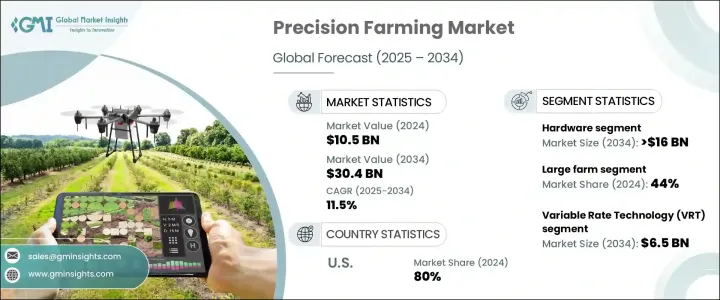
세계의 정밀농업 시장은 2024년에 105억 달러로 평가되었고, 2025년부터 2034년까지 11.5%의 연평균 복합 성장률(CAGR)로 성장할 것으로 예측되고 있습니다.
급속한 인구 증가 및 식량 수요 증가가 이 시장 확대의 주요 원동력이 되고 있습니다. 세계 인구가 매년 약 8,300만 명씩 증가하고 있는 가운데, 지속가능한 농업의 실천이 보다 급무가 되고 있습니다. 작물의 수율을 최적화하기 위해 첨단 기술을 활용하는 정밀농업은 이 문제에 대한 중요한 해결책으로 부상했습니다.
정밀농업의 도입을 촉진하는 데 있어서 세계 각국의 정부는 중요한 역할을 하고 있습니다. 보조금 및 조성금, 시책적 인센티브를 제공함으로써 환경에 미치는 영향을 최소화하면서 농업 생산성을 높이는 것을 목표로 하고 있습니다. 정밀농업은 IoT, AI, 드론, 데이터 분석 등의 기술을 통합하여 효율성을 높이고 자원 소비를 줄입니다. 이러한 기술 혁신은 농업 종사자의 생산성 향상, 운영 비용 절감, 친환경 실천을 지원하고 장기적으로 지속 가능한 식량 생산을 보장합니다.
| 시장 범위 | |
|---|---|
| 시작 연도 | 2024년 |
| 예측 연도 | 2025-2034년 |
| 시작 금액 | 105억 달러 |
| 예측 금액 | 304억 달러 |
| CAGR | 11.5% |
시장은 컴포넌트별로 구분되며, 2024년에는 하드웨어가 55% 이상 시장 점유율을 차지해 1위에 올랐습니다. 2034년까지 이 부문은 160억 달러 이상에 달할 것으로 예측됩니다. 농업에 있어서 GPS, 센서, 자동화 기기의 채용이 증가하고 있는 것이, 이 성장을 뒷받침하고 있습니다. 토양 센서, 웨더 스테이션, GPS 수신기 등의 하드웨어 도구를 통해 농업 종사자는 상태를 모니터링하고 관개를 최적화하고 심기 및 수확과 같은 중요한 작업을 자동화할 수 있습니다. 자동화는 더욱 효율을 높이고, 종래는 수작업으로 하고 있던 작업을 로봇 시스템이 실시했습니다.
농장 규모별로는 대규모 농장이 2024년 시장 점유율의 약 44%를 차지했습니다. 생산성 및 효율성을 향상시키기 위해 첨단 기술에 투자할 수 있는 것이 이 우위성의 원인이 되고 있습니다. GPS 유도 트랙터, 무인 항공기, 스마트 관개 시스템은 작물의 정확한 모니터링과 자원 관리를 가능하게 합니다. 대규모 농장이 운영 최적화를 목표로 하는 동안 정밀농업 솔루션에 대한 수요는 계속 증가하고 있습니다.
기술적 측면에서 가변 속도 기술(VRT)은 지배적인 부문이며 2034년까지 65억 달러를 창출할 것으로 예상됩니다. 이 기술을 통해 농업 종사자는 특정 농장 조건에 따라 비료, 씨앗 및 농약의 살포를 조정할 수 있습니다. 센서, GPS 및 고급 소프트웨어의 데이터를 활용하여 VRT는 최적의 투입 배분을 보장하고 수확량을 극대화하면서 낭비를 없애줍니다. 비용 효율성과 지속 가능한 농업이 중요해지면서 도입이 가속화되고 농업 기관의 지원도 증가하고 있기 때문에 이러한 시스템은 보다 친숙해지고 있습니다.
용도별로는 수율 모니터링이 2024년 점유율 25%로 시장을 선도했습니다. 이 시스템은 농업 종사자가 실시간으로 작물 생산을 추적하고 생산성을 높이기 위해 데이터 중심의 의사 결정을 가능하게 합니다. 센서 기술과 데이터 분석의 진보는 수율 패턴과 토양 상태에 대한 정확한 인사이트를 제공하고 장기적인 농장 관리를 개선합니다. 식량 수요가 증가함에 따라 정밀농업 솔루션은 농업 생산 최적화에 필수적입니다.
북미는 세계 시장을 선도하고 있으며, 2024년에는 미국이 80%의 점유율을 차지했습니다. 선진 농업 기술의 보급, 정부 보조금, 강력한 인프라가 정밀농업의 확대를 지원하고 있습니다. 무인 항공기, 센서 및 데이터 분석에 대한 의존도가 높아짐에 따라 농업 경영이 지속적으로 변화하여 농업이 더욱 효율적이고 수익성이 높아지고 있습니다.
The Global Precision Farming Market was valued at USD 10.5 billion in 2024 and is projected to grow at an 11.5% CAGR from 2025 to 2034. Rapid population growth and the increasing demand for food are key drivers behind this expansion. With the global population rising by approximately 83 million annually, the need for sustainable agricultural practices has become more urgent. Precision farming, which leverages advanced technologies to optimize crop yields, has emerged as a critical solution to this challenge.
Governments worldwide are playing a crucial role in promoting the adoption of precision agriculture. By offering subsidies, grants, and policy incentives, they aim to boost agricultural productivity while minimizing environmental impact. Precision farming integrates technologies such as IoT, AI, drones, and data analytics to improve efficiency and reduce resource consumption. These innovations help farmers enhance productivity, cut operational costs, and implement eco-friendly practices, ensuring sustainable food production in the long run.
| Market Scope | |
|---|---|
| Start Year | 2024 |
| Forecast Year | 2025-2034 |
| Start Value | $10.5 billion |
| Forecast Value | $30.4 billion |
| CAGR | 11.5% |
The market is segmented based on components, with hardware leading in 2024, holding over 55% market share. By 2034, the segment is anticipated to surpass USD 16 billion. The increasing adoption of GPS, sensors, and automated equipment in farming operations is driving this growth. Hardware tools such as soil sensors, weather stations, and GPS receivers enable farmers to monitor conditions, optimize irrigation, and automate critical tasks like planting and harvesting. Automation further enhances efficiency, with robotic systems performing tasks traditionally handled manually.
By farm size, large farms accounted for approximately 44% of the market share in 2024. Their ability to invest in advanced technology for improved productivity and efficiency contributes to this dominance. GPS-guided tractors, drones, and smart irrigation systems allow for precise crop monitoring and resource management. As large-scale farms seek to optimize operations, demand for precision farming solutions continues to rise.
Technology-wise, variable rate technology (VRT) is a dominant segment, expected to generate USD 6.5 billion by 2034. This technology allows farmers to tailor the application of fertilizers, seeds, and pesticides based on specific field conditions. By leveraging data from sensors, GPS, and advanced software, VRT ensures optimal input distribution, reducing waste while maximizing yield. The growing emphasis on cost efficiency and sustainable farming is accelerating adoption, with increased support from agricultural institutions making these systems more accessible.
In terms of applications, yield monitoring led the market in 2024 with a 25% share. This system helps farmers track crop performance in real time, enabling data-driven decisions to enhance productivity. Advancements in sensor technology and data analytics provide precise insights into yield patterns and soil conditions, improving long-term farm management. With increasing food demand, precision farming solutions are becoming essential for optimizing agricultural output.
North America leads the global market, with the US holding an 80% share in 2024. The widespread adoption of advanced agricultural technologies, government subsidies, and strong infrastructure support precision farming expansion. Increased reliance on drones, sensors, and data analytics continues to transform farming operations, making agriculture more efficient and profitable.