


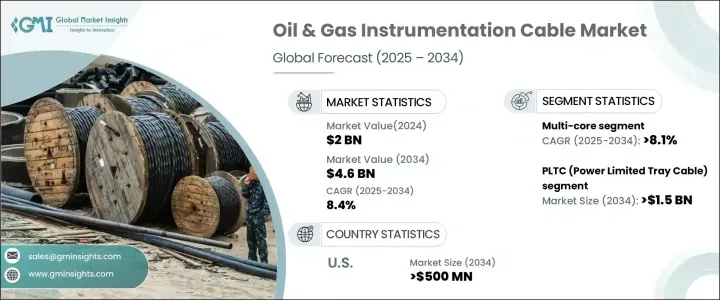
세계의 석유 및 가스 계장 케이블 시장은 2024년에 20억 달러로 평가되었고, 2025-2034년 CAGR 8.4%로 견조하게 확대할 전망입니다.
탐사 및 생산 활동의 급증과 자동화의 진전이 함께, 고성능 계장 케이블 수요가 높아지고 있습니다. 세계 에너지 소비가 계속 증가하고 있는 가운데, 기업은 전통적인 자원과 비전통적인 자원 모두에 주목하고 있으며, 업무의 안전성, 효율성, 실시간 데이터 전송을 보장하는 신뢰할 수 있는 케이블 솔루션의 필요성이 커지고 있습니다. 디지털 기술이 석유 및 가스 인프라에 필수적이면서 이러한 케이블은 원격 모니터링, 프로세스 자동화 및 가혹한 환경에서 원활한 통신을 지원하는 데 중요한 역할을 합니다.
석유 및 가스 사업에서는 효율을 높이고 다운타임을 줄이기 위해 인공지능(AI), IoT 및 예측 분석 등 스마트 기술이 급속히 채용되고 있습니다. 이 트랜스미션은 가혹한 환경에도 견딜 수 있고 중단 없는 데이터 전송 및 전원 공급을 보장하는 고도의 계장 케이블이 필요합니다. 시장에서는 내구성, 유연성이 뛰어나고 온도 변동, 습기 및 화학물질 등의 노출에 내성이 있는 케이블로의 전환을 볼 수 있습니다. 게다가 에너지의 지속가능성을 위한 세계의 움직임은 해양 시추 및 심해 탐사에 대한 투자를 촉진하고 복잡한 작업을 지원할 수 있는 고품질 케이블에 대한 수요를 강화하고 있습니다. 게다가 안전 및 환경보호에 대한 규제의 의무화로 인해 기업은 첨단 케이블 솔루션으로의 업그레이드를 강요하고 시장 확대가 더욱 가속화되고 있습니다.
| 시장 범위 | |
|---|---|
| 시작 연도 | 2024년 |
| 예측 연도 | 2025-2034년 |
| 시작 금액 | 20억 달러 |
| 예측 금액 | 46억 달러 |
| CAGR | 8.4% |
2034년까지 PLTC(Power Limited Tray Cable) 분야는 석유 및 가스 시설 내구성과 다재다능한 케이블 솔루션에 대한 요구가 증가함에 따라 15억 달러를 창출할 것으로 예상됩니다. 이러한 케이블은 고온, 습기, 화학물질에 대한 노출과 같은 가혹한 조건을 견딜 수 있도록 설계되었지만 전력 공급 및 제어의 이중 목적을 수행합니다. 해양 플랫폼, 시추 장비 및 정유소 등에서 널리 사용되며 실시간 데이터 전송 및 자동화에 필수적인 지원을 제공하기 때문에 수요가 증가하고 있습니다. 기업이 운영 최적화 및 가동 중지 시간을 단축하기 위해 노력하는 동안, 최신 산업 시스템에서 PLTC 케이블의 역할은 계속 확대되고 있습니다.
코어 유형별로 분류되는 멀티 코어 케이블 부문은 2034년까지 연평균 복합 성장률(CAGR) 8.1%로 성장할 전망입니다. 확대되는 석유 및 가스 사업에서는 효율적인 신호 및 전력 트랜스미션이 요구되기 때문에 대규모 프로젝트에서는 멀티 코어 케이블이 선택되고 있습니다. 기존 배선 설정과 달리 이러한 케이블은 여러 개의 도체를 단일 케이싱에 통합하여 설치 효율성을 높이고 필요한 공간을 줄입니다. 전기 및 제어 신호를 모두 다룰 수 있으므로 디지털 유전 기술, 고급 자동화 시스템 및 실시간 모니터링에 필수적입니다. 해외 설비, 파이프라인 및 정제 장비에서 이러한 케이블의 채택이 증가하고 있는 것이 시장 성장의 주요 촉진요인이 되고 있습니다.
미국의 석유 및 가스 계장 케이블 시장은 2034년까지 5억 달러에 달할 것으로 예상됩니다. 탐사, 생산, 현대화에 대한 노력이 강화되고 있는 가운데 고성능 계장 케이블 수요가 급증하고 있습니다. 자동화, 디지털화, IoT는 업스트림, 중류 및 다운스트림 작업에 통합되어 첨단 케이블 솔루션에 대한 투자를 촉진합니다. 이러한 최신 기술에는 견고한 전력 및 데이터 전송 기능이 필요하며 업계의 성장에는 계장 케이블이 필수적입니다. 기업이 효율성 및 신뢰성을 우선시함에 따라 계장 케이블 시장은 지속적인 확대를 이룰 것으로 보입니다.
The Global Oil And Gas Instrumentation Cable Market reached USD 2 billion in 2024 and is set to expand at a robust CAGR of 8.4% from 2025 to 2034. The surge in exploration and production activities, combined with advancements in automation, is fueling demand for high-performance instrumentation cables. As global energy consumption continues to rise, companies are focusing on both traditional and non-traditional resources, increasing the need for reliable cabling solutions that ensure operational safety, efficiency, and real-time data transmission. With digital technologies becoming integral to oil and gas infrastructure, these cables play a critical role in supporting remote monitoring, process automation, and seamless communication in extreme environments.
Oil and gas operations are rapidly adopting smart technologies such as artificial intelligence (AI), IoT, and predictive analytics to enhance efficiency and reduce downtime. This transformation requires advanced instrumentation cables that can withstand harsh conditions, ensuring uninterrupted data transmission and power supply. The market is seeing a shift towards cables with superior durability, flexibility, and resistance to temperature fluctuations, moisture, and chemical exposure. Furthermore, the global push toward energy sustainability is driving investment in offshore drilling and deepwater exploration, reinforcing the demand for high-quality cables that can support complex operations. In addition, regulatory mandates for safety and environmental protection are compelling companies to upgrade to advanced cabling solutions, further accelerating market expansion.
| Market Scope | |
|---|---|
| Start Year | 2024 |
| Forecast Year | 2025-2034 |
| Start Value | $2 Billion |
| Forecast Value | $4.6 Billion |
| CAGR | 8.4% |
By 2034, the PLTC (Power Limited Tray Cable) segment is projected to generate USD 1.5 billion, driven by the growing need for durable and versatile cabling solutions in oil and gas facilities. These cables serve a dual purpose of power supply and control while being engineered to endure extreme conditions such as high temperatures, moisture, and chemical exposure. Their widespread use in offshore platforms, drilling rigs, and refineries is bolstering demand, as they provide essential support for real-time data transmission and automation. As companies strive to optimize operations and reduce downtime, the role of PLTC cables in modern industrial systems continues to expand.
The multi-core cable segment, categorized by core type, is set to grow at a CAGR of 8.1% through 2034. Expanding oil and gas operations demand efficient signal and power transmission, making multi-core cables the preferred choice for large-scale projects. Unlike conventional wiring setups, these cables consolidate multiple conductors within a single casing, enhancing installation efficiency and reducing space requirements. Their capability to handle both electric and control signals makes them indispensable for digital oilfield technologies, advanced automation systems, and real-time monitoring. The increasing adoption of these cables in offshore installations, pipelines, and refining units is a key driver of market growth.
The U.S. oil & gas instrumentation cable market is expected to reach USD 500 million by 2034. With exploration, production, and modernization efforts intensifying, demand for high-performance instrumentation cables is surging. The integration of automation, digitization, and IoT across upstream, midstream, and downstream operations is pushing investment in advanced cabling solutions. These modern technologies require robust power and data transmission capabilities, making instrumentation cables critical for industry growth. As companies prioritize efficiency and reliability, the market for instrumentation cables is set to experience sustained expansion.