


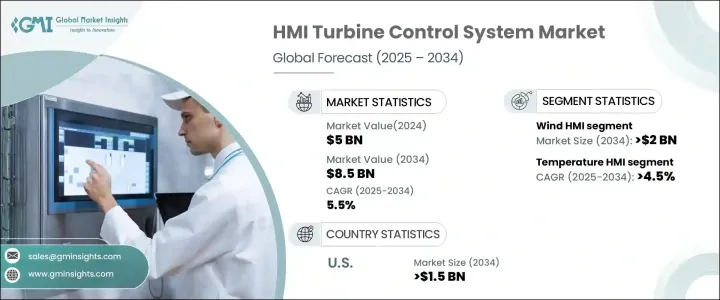
세계의 HMI 터빈 제어 시스템 시장은 2024년 50억 달러로 평가되었으며, 2025년부터 2034년까지 5.5%의 연평균 성장률(CAGR)로 성장할 것으로 예측됩니다.
이러한 괄목할 만한 성장은 산업 및 유틸리티 부문 전반에서 에너지 효율성 향상에 대한 관심이 높아진 데서 비롯됩니다. 기업들은 운영 효율성을 높이고 가동 중단 시간을 최소화하며 연료 사용률을 개선하는 첨단 제어 시스템에 우선순위를 두고 있습니다. 인공지능(AI), 머신러닝(ML), 사물인터넷(IoT)과 같은 첨단 기술의 통합은 산업에 혁신을 일으키고 있습니다. 이러한 발전은 실시간 모니터링, 예측 분석, 사전 예방적 유지보수를 가능하게 하여 운영 중단을 줄이는 동시에 시스템 안정성을 강화합니다. 또한 재생 에너지 채택이 급증하고 노후화된 전력 인프라가 현대화되면서 정교한 터빈 제어 솔루션의 필요성이 더욱 강조되고 있습니다.
정부와 기업 모두 차세대 제어 시스템에 대한 강력한 투자를 통해 증가하는 에너지 수요와 환경 문제에 대응하고 있습니다. 시장의 빠른 진화는 성능 최적화에 중추적인 역할을 하는 자동화 및 데이터 기반 인사이트에 대한 강조가 커지면서 더욱 가속화되고 있습니다. 업계가 변동하는 에너지 수요와 엄격한 규제를 헤쳐나가는 가운데, 고급 HMI 시스템은 지속 가능하고 효율적인 에너지 관리를 달성하는 데 필수적인 도구로 부상하고 있습니다.
| 시장 범위 | |
|---|---|
| 시작 연도 | 2024년 |
| 예측 연도 | 2025-2034년 |
| 시작 금액 | 50억 달러 |
| 예측 금액 | 85억 달러 |
| CAGR | 5.5% |
풍력 터빈 제어 시스템 부문은 지속적인 기술 혁신과 지원 정책에 힘입어 2034년까지 20억 달러에 달할 것으로 예상됩니다. 각국 정부가 풍력 에너지 프로젝트에 세제 혜택과 보조금 등의 인센티브를 제공하면서 재생 에너지원으로의 전환을 위한 전 세계적인 노력이 강화되고 있습니다. 이러한 조치로 인해 엄격한 규제 기준을 충족하고 그리드 안정성을 높이며 에너지 신뢰성을 보장하는 첨단 터빈 제어 시스템의 도입이 촉진되고 있습니다. 지속 가능성과 그리드 효율성에 대한 관심으로 풍력 터빈 제어 시스템은 에너지 부문 혁신의 초석으로 자리매김하고 있습니다.
온도 모니터링 부문은 2034년까지 4.5%의 견고한 성장률을 보일 것으로 예상됩니다. 첨단 온도 제어 시스템은 터빈 성능을 최적화하고 중대한 고장을 예방하는 데 필수적이며, 발전 및 제조 분야에서 중요한 역할을 담당하고 있습니다. 정밀한 온도 모니터링 기능의 통합은 운영 효율성을 향상시킬 뿐만 아니라 터빈 장비의 수명을 연장하여 안정적이고 효율적인 에너지 솔루션에 대한 증가하는 수요를 충족시킵니다.
에너지 관리 및 인프라 현대화에 대한 수요 증가로 인해 미국의 HMI 터빈 제어 시스템 시장은 2034년까지 15억 달러에 달할 것으로 예상됩니다. 분산형 에너지 자원이 확대되고 재생 가능한 솔루션이 주목을 받으면서 업계에서는 실시간 모니터링 및 분석 기술을 빠르게 채택하고 있습니다. 배출량을 줄이고 에너지 효율을 높이기 위한 연방 및 주 정부의 규제는 혁신적인 제어 시스템의 도입을 더욱 장려하고 있습니다. 이러한 발전은 상당한 시장 성장을 촉진하고 재생 에너지를 기존 전력망에 원활하게 통합하여 혁신과 투자를 위한 역동적인 환경을 조성하고 있습니다.
The Global HMI Turbine Control System Market, valued at USD 5 billion in 2024, is projected to grow at a steady CAGR of 5.5% from 2025 to 2034. This remarkable growth stems from a heightened focus on enhancing energy efficiency across industrial and utility sectors. Organizations are prioritizing advanced control systems that drive operational efficiency, minimize downtime, and improve fuel utilization. The integration of cutting-edge technologies like artificial intelligence (AI), machine learning (ML), and the Internet of Things (IoT) is revolutionizing the industry. These advancements enable real-time monitoring, predictive analytics, and proactive maintenance, reducing operational disruptions while bolstering system reliability. Additionally, the surge in renewable energy adoption and modernization of aging power infrastructure further accentuate the need for sophisticated turbine control solutions.
Governments and businesses alike are responding to increasing energy demands and environmental concerns with robust investments in next-generation control systems. The market's rapid evolution is fueled by a growing emphasis on automation and data-driven insights, which play a pivotal role in optimizing performance. As industries navigate fluctuating energy needs and stringent regulations, advanced HMI systems are emerging as indispensable tools for achieving sustainable and efficient energy management.
| Market Scope | |
|---|---|
| Start Year | 2024 |
| Forecast Year | 2025-2034 |
| Start Value | $5 Billion |
| Forecast Value | $8.5 Billion |
| CAGR | 5.5% |
The wind turbine control systems segment is projected to reach USD 2 billion by 2034, driven by ongoing technological innovation and supportive policies. Global efforts to transition toward renewable energy sources are intensifying, with governments providing incentives such as tax benefits and subsidies for wind energy projects. These measures are propelling the adoption of advanced turbine control systems that meet strict regulatory standards, enhance grid stability, and ensure energy reliability. The focus on sustainability and grid efficiency continues to position wind turbine control systems as a cornerstone of the energy sector's transformation.
In the temperature monitoring segment, growth is anticipated at a robust rate of 4.5% through 2034. Advanced temperature control systems are essential for optimizing turbine performance and preventing critical failures, underscoring their vital role in power generation and manufacturing. The integration of precise temperature monitoring capabilities not only enhances operational efficiency but also extends the lifespan of turbine equipment, meeting the growing demand for reliable and efficient energy solutions.
The U.S. market for HMI turbine control systems is expected to reach USD 1.5 billion by 2034, driven by increasing demands for energy management and infrastructure modernization. As distributed energy resources expand and renewable solutions gain traction, industries are rapidly adopting real-time monitoring and analytics technologies. Federal and state regulations aimed at reducing emissions and boosting energy efficiency further encourage the implementation of innovative control systems. These advancements are fostering significant market growth and ensuring the seamless integration of renewable energy into existing power grids, creating a dynamic environment for innovation and investment.