


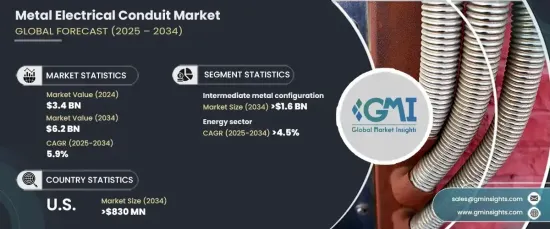
세계 금속 전선관 시장은 2024년 34억 달러로 평가되며 2025년부터 2034년까지 연평균 5.9%로 성장할 것으로 예상됩니다. 이러한 성장은 건설 활동의 확대, 급속한 산업화, 견고한 전기 인프라의 필요성에 의해 촉진될 것입니다.
도시화와 에너지 효율이 높은 재생 가능 전력 시스템으로의 전환은 시장 수요를 더욱 확대시키고 있으며, 인프라 현대화 프로젝트는 채택을 촉진하는 데 매우 중요한 역할을 하고 있습니다.
지속가능한 재료와 경쟁력 있는 가격의 발전은 전선관 제조의 기술 혁신에 박차를 가하고 있습니다. 기업들은 공급망을 최적화하고 유통망을 확장하기 위해 전략적 파트너십과 인수합병에 집중하고 있습니다. 이러한 접근 방식은 지속가능한 건설 관행과 엄격한 안전 기준 준수에 대한 전 세계적인 관심과 일치합니다.
| 시장 범위 | |
|---|---|
| 시작 연도 | 2024년 |
| 예측 연도 | 2025-2034년 |
| 시작 금액 | 34억 달러 |
| 예상 금액 | 62억 달러 |
| CAGR | 5.9% |
중간 금속 도관(IMC) 분야는 경량 설계, 비용 효율성 및 강도로 인해 2034년까지 16억 달러의 매출을 달성할 것으로 예상되며, IMC는 경질 금속 도관(RMC)을 대체할 수 있는 경제적인 대안을 제공하면서 동등한 성능을 유지하면서 산업 및 상업용 응용 분야에서 점점 더 많은 사랑을 받고 있습니다. 산업 및 상업용 애플리케이션에 점점 더 선호되고 있습니다. 내식성 및 코팅 도관에 대한 수요가 증가함에 따라 제조업체가 진화하는 고객 요구 사항과 규제 표준을 충족하기 위해 혁신을 추진함에 따라 다양화를 촉진하고 있습니다. 에너지 효율적인 건축 표준이 시장 역학을 재구성함에 따라 맞춤형과 지속가능성이 중요한 요소로 떠오르고 있습니다.
에너지 부문은 2034년까지 4.5%의 CAGR로 큰 성장을 이룰 것으로 예상됩니다. 태양광 및 풍력발전을 포함한 재생에너지 프로젝트는 전기 배선을 보호하고 운영의 안전을 보장하기 위해 신뢰할 수 있고 내후성이 뛰어난 전선관이 필요합니다. 스마트 그리드 인프라와 첨단 에너지 관리 시스템의 확장은 복잡한 네트워크를 지원하도록 설계된 고품질 도관에 대한 수요를 더욱 증가시키고 있습니다. 제조업체들은 환경 친화적 건설의 중요성을 반영하여 에너지 부문의 지속가능성 목표에 부합하는 내화 및 내식성 제품을 출시하고 있습니다.
미국의 금속 전선관 시장은 2034년까지 8억 3,000만 달러 규모의 시장을 창출할 것으로 예상됩니다. 주거, 상업 및 산업 분야의 인프라 개발과 도시화로 인해 내구성, 내화성 및 수명이 긴 전선관에 대한 수요가 증가하고 있습니다. 재생에너지로의 전환이 진행 중인 이 나라에서는 현대적인 에너지 계획을 지원할 수 있는 신뢰할 수 있는 전기 시스템에 대한 필요성이 더욱 커지고 있습니다.
전반적으로 금속 전선관 시장은 기술 발전, 지속가능성 트렌드, 세계 인프라 개발의 증가에 힘입어 지속적인 성장세를 보이고 있습니다. 재료 설계의 혁신과 엄격한 안전 기준을 충족하는 데 중점을 두어 다양한 산업의 진화하는 수요에 대응할 수 있는 역량을 갖추고 있습니다.
The Global Metal Electrical Conduit Market, valued at USD 3.4 billion in 2024, is poised to grow at a CAGR of 5.9% during 2025-2034. This growth is fueled by expanding construction activities, rapid industrialization, and the need for robust electrical infrastructure. Urbanization and the transition to energy-efficient and renewable power systems further amplify market demand, with infrastructure modernization projects playing a pivotal role in driving adoption.
Advancements in sustainable materials and competitive pricing have spurred innovation in conduit manufacturing. Companies are focusing on strategic partnerships and acquisitions to optimize supply chains and broaden distribution networks. This approach aligns with the increasing global emphasis on sustainable construction practices and adherence to stringent safety standards.
| Market Scope | |
|---|---|
| Start Year | 2024 |
| Forecast Year | 2025-2034 |
| Start Value | $3.4 Billion |
| Forecast Value | $6.2 Billion |
| CAGR | 5.9% |
The intermediate metal conduit (IMC) segment is expected to generate USD 1.6 billion by 2034, owing to its lightweight design, cost-effectiveness, and strength. IMCs are increasingly favored for industrial and commercial applications, offering an economical alternative to rigid metal conduits (RMC) while maintaining comparable performance. Rising demand for corrosion-resistant and coated conduits is driving diversification as manufacturers innovate to meet evolving customer requirements and regulatory standards. Customization and sustainability are becoming critical factors as energy-efficient building codes reshape market dynamics.
The energy sector is set to experience significant growth, with a CAGR of 4.5% through 2034. Renewable energy projects, including solar and wind installations, require reliable, weather-resistant conduits to protect electrical wiring and ensure operational safety. The expansion of smart grid infrastructure and advanced energy management systems is further boosting demand for high-quality conduits designed to support complex networks. Manufacturers are introducing fire-resistant and corrosion-proof products that align with the energy sector's sustainability goals, reflecting the growing importance of environmentally conscious construction.
U.S. metal electrical conduit market is projected to generate USD 830 million through 2034. Infrastructure development in residential, commercial, and industrial sectors, coupled with urbanization, is driving demand for durable, fire-resistant, and long-lasting conduits. The country's increasing shift toward renewable energy sources has further fueled the need for reliable electrical systems capable of supporting modern energy initiatives.
Overall, the metal electrical conduit market is poised for sustained growth, supported by technological advancements, sustainability trends, and rising global infrastructure development. With innovations in material design and a focus on meeting rigorous safety standards, the market is well-positioned to address the evolving demands of diverse industries.