


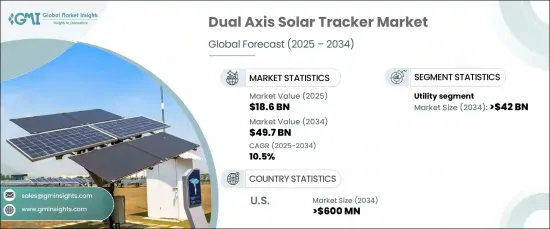
세계의 2축 태양광 추적기 시장은 2024년 186억 달러로 평가되었고 2025년부터 2034년까지 연평균 복합 성장률(CAGR) 10.5%로 성장할 것으로 예측됩니다.
이 유형의 태양 추적 시스템은 태양전지판을 수평 및 수직 방향으로 조정하여 하루 종일 일년 내내 태양의 움직임을 추적 할 수 있습니다. 이 동적 추적은 태양전지판의 노출을 극대화하여 에너지 생산량을 향상시킵니다.
인공지능(AI), 사물인터넷(IoT), 원격 모니터링 통합 등의 기술 발전으로 2축 추적기 장비의 성능이 크게 향상되었습니다. 최신 시스템은 더욱 모듈화되어 설치가 더욱 간단하고 비용 효율적이기 때문에 대규모 프로젝트의 확장성을 높이는 데 도움이 됩니다. 이러한 기술 혁신은 특히 태양에너지 취득에 최적인 기상조건을 지닌 지역의 에너지수율 향상에 기여하고 시장 확대를 추진하고 있습니다. 게다가 의욕적인 신재생에너지 목표를 내세우고 있는 국가에서는 2축 태양광 추적기와 같은 고효율 솔루션에 대한 투자가 증가하고 있으며, 이 분야의 성장을 더욱 추진하고 있습니다.
| 시장 범위 | |
|---|---|
| 시작 연도 | 2024년 |
| 예측 연도 | 2025-2034년 |
| 시작 금액 | 186억 달러 |
| 예측 금액 | 497억 달러 |
| CAGR | 10.5% |
2축 추적기는 태양에너지를 가능한 한 많이 캡처하는 것이 중요한 일사량이 많은 지역에서 특히 유용합니다. 이러한 지역에는 남유럽의 일부, 중동, 아시아 및 남미의 다양한 장소가 포함됩니다. 고정식 시스템에 비해 최대 40%, 단축 추적기에 비해 15%-25% 에너지 생산량을 향상시킬 수 있기 때문에 2축 시스템의 인기가 높아지고 있습니다. 2축 트래킹과 조합한 2면 태양전지판의 채용이 늘어나고 있는 것도 태양에너지 시스템의 효율 향상에 더욱 기여하고 있습니다.
2축 태양광 추적기 시장은 주택, 상업, 산업, 유틸리티 등 여러 용도로 구분됩니다. 유틸리티분야는 2034년까지 420억 달러 이상에 달할 것으로 예상됩니다. 태양광발전개발업자와 정부계 조직과의 개발협력이 유틸리티 규모에서의 시스템 설치 확대에 공헌하고 있습니다. 또한 구조적 요구사항 및 안전 기준 등 2축 태양광 추적기를 관리하는 규제도 시장 성장에 기여합니다.
미국의 2축 태양광 추적기 시장은 2034년까지 6억 달러 이상에 달할 것으로 예측됩니다. 신재생에너지 비용의 저하와 태양광 발전 및 풍력 발전의 이용 확대가 이 분야의 개발에 박차를 가하고 있습니다. 설계의 혁신은 추적기의 효율성과 신뢰성을 크게 향상시키고 이 산업을 지속적인 성장으로 이끌고 있습니다. 토지의 최적 이용과 토지에 제약이 있는 지역의 패널 밀도 향상 등 주요 장점이 시장의 미래를 형성할 것으로 예상됩니다.
The Global Dual Axis Solar Tracker Market, valued at USD 18.6 billion in 2024, is projected to grow at a CAGR of 10.5% between 2025 and 2034. This type of solar tracking system adjusts solar panels in both horizontal and vertical directions, allowing them to follow the sun's movement across the sky throughout the day and year. This dynamic tracking maximizes solar panel exposure, leading to enhanced energy production.
Advancements in technology, such as the integration of Artificial Intelligence (AI), Internet of Things (IoT), and remote monitoring, are significantly improving the performance of dual-axis trackers. Modern systems are more modular, making installation simpler and more cost-effective, which helps increase scalability for large projects. These innovations contribute to higher energy yields, especially in regions with optimal weather conditions for solar energy capture, boosting market expansion. In addition, countries with ambitious renewable energy targets are increasingly investing in high-efficiency solutions like dual-axis solar trackers, further propelling segment growth.
| Market Scope | |
|---|---|
| Start Year | 2024 |
| Forecast Year | 2025-2034 |
| Start Value | $18.6 Billion |
| Forecast Value | $49.7 Billion |
| CAGR | 10.5% |
Dual-axis trackers are especially beneficial in areas with intense solar radiation, where it is critical to capture as much solar energy as possible. These regions include parts of Southern Europe, the Middle East, and various locations in Asia and South America. With the ability to enhance energy production by up to 40% compared to fixed systems and 15-25% more than single-axis trackers, dual-axis systems are becoming more popular. The growing adoption of bifacial solar panels, which are paired with dual-axis tracking, further contributes to the increased efficiency of solar energy systems.
The dual-axis solar tracker market is divided into several applications, including residential, commercial, industrial, and utility sectors. The utility segment is expected to surpass USD 42 billion by 2034, driven by both public and private sector investments and technological advancements in tracking systems. Collaborations between solar developers and government-owned organizations are helping to expand the installation of these systems across utility-scale projects. Additionally, regulations governing dual-axis solar trackers, such as structural requirements and safety standards, are also contributing to market growth.
The U.S. dual-axis solar tracker market is forecast to reach over USD 600 million by 2034. The decline in renewable energy costs and the growing use of solar and wind power are fueling the sector's development. Innovations in design have significantly boosted tracker efficiency and reliability, positioning the industry for continued growth. Key benefits, including optimal land utilization and higher panel density in land-constrained regions, are expected to shape the future of the market.