


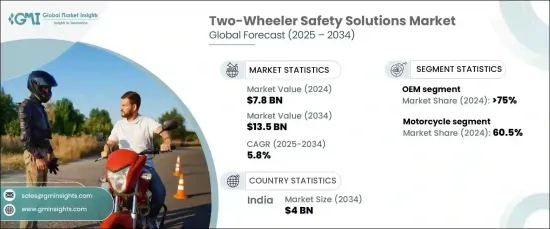
세계 이륜차용 안전 솔루션 시장의 2024년 시장 규모는 78억 달러로, 2025-2034년에 CAGR 5.8%로 성장할 것으로 예측됩니다. 인공지능(AI), 사물인터넷(IoT), 센서와 같은 첨단 기술의 통합이 진행되면서 이륜차의 안전성이 크게 향상되고 있습니다. 이러한 기술 혁신은 실시간 데이터 분석, 안전 예측 메커니즘, 충돌 감지, 비상 경보, 적응형 크루즈 컨트롤 등의 시스템을 통해 라이더 보호를 향상시킬 수 있습니다. 또한 IoT 기반 헬멧과 웨어러블은 라이더의 지속적인 연결성을 유지하고, 잠재적 위험에 대한 경고를 제공하며, 도로에서의 상황 인식을 향상시키는 데 도움을 줍니다.
소비자의 안전에 대한 인식이 높아지면서 이러한 첨단 안전 솔루션에 대한 수요가 증가하고 있습니다. 교육 구상, 사고에 대한 언론 보도, 정보에 대한 쉬운 접근은 모두 라이더의 안전에 대한 인식을 높이고 있습니다. 이러한 변화는 특히 커넥티드 헬멧이나 첨단 라이더 지원 시스템(ARAS)과 같은 신기술을 채택하기 쉬운 도시 지역의 젊은 라이더들 사이에서 두드러지게 나타나고 있습니다. 안전에 대한 관심이 높아지면서 제조업체와 애프터마켓 공급업체들은 이러한 수요에 부응하기 위해 저렴하고 사용하기 쉬운 솔루션을 제공하는 데 주력하고 있습니다.
| 시장 범위 | |
|---|---|
| 시작연도 | 2024년 |
| 예측연도 | 2025-2034년 |
| 시작 금액 | 78억 달러 |
| 예상 금액 | 135억 달러 |
| CAGR | 5.8% |
시장은 주문자상표부착생산(OEM) 부문과 애프터마켓 부문으로 나뉘며, OEM 부문이 가장 큰 시장 점유율을 차지하며 2024년에는 75% 이상을 차지했습니다. 이는 신형 이륜차 및 스쿠터에 안전 기능이 탑재되고 있는 것이 주요 요인으로 작용하고 있습니다. 잠금 방지 브레이크 시스템(ABS), 트랙션 컨트롤, 충돌 감지 등의 안전 솔루션은 특히 고성능 이륜차 신모델에 표준으로 장착되고 있습니다. 한편, 애프터마켓 부문도 괄목할 만한 성장세를 보이고 있습니다. 기존 차량의 안전성을 업그레이드하려는 라이더들이 늘어나면서 추가 에어백, 첨단 조명 시스템, 도난 방지 기능 등 애프터마켓 솔루션의 인기가 높아지고 있습니다. 이러한 솔루션은 교통안전에 대한 인식이 높아지고, 비용 효율적이고 설치가 간편한 기능의 가용성 덕분에 큰 호응을 얻고 있습니다.
시장은 차종별로 세분화되며, 2024년에는 이륜차가 전체 시장의 60.5%를 차지했습니다. 이러한 우위는 특히 교통 체증과 사고 위험이 높은 지역에서 고성능 이륜차에 첨단 안전 기능의 채택이 증가하고 있기 때문입니다. 이륜차는 엔진이 크고 속도가 빠르기 때문에 라이더의 안정성을 높이고 사고 위험을 줄이기 위해 코너링 ABS, 트랙션 컨트롤 시스템 등 첨단 안전 솔루션이 필요한 경우가 많습니다. 스쿠터 부문도 규모는 작지만 꾸준히 성장하고 있습니다. 스쿠터는 혼잡한 도시에서 단거리 출퇴근용으로 많이 사용되므로 결합 브레이크 시스템(CBS)이나 충돌 감지 시스템과 같은 합리적인 가격의 안전 기능에 대한 수요가 발생하고 있습니다. 전기 스쿠터의 인기가 높아지고 공유 모빌리티가 확대됨에 따라 도시 통근을 위한 안전 솔루션 개발에 대한 관심이 계속 높아지고 있습니다.
인도의 이륜차용 안전 솔루션 시장은 2034년까지 40억 달러에 달할 것으로 예상됩니다. 수요의 원동력은 이륜차와 스쿠터의 보급이 증가하고 안전에 대한 인식이 높아진 데 따른 것입니다. 인도의 많은 도시에서 급속한 도시화와 교통 체증이 증가함에 따라 ABS 및 스마트 헬멧과 같은 안전 기술 강화의 필요성이 더욱 커지고 있습니다.
보고서 내용
The Global Two-Wheeler Safety Solutions Market was valued at USD 7.8 billion in 2024 and is expected to grow at a CAGR of 5.8% from 2025 to 2034. The growing integration of advanced technologies, such as Artificial Intelligence (AI), the Internet of Things (IoT), and sensors, has significantly enhanced two-wheeler safety. These innovations enable real-time data analysis, predictive safety mechanisms, and improved rider protection through systems like crash detection, emergency alerts, and adaptive cruise control. In addition, IoT-powered helmets and wearables help maintain continuous connectivity, offering alerts about potential hazards and improving situational awareness on the road.
The increased awareness of safety among consumers has driven the demand for these advanced safety solutions. Educational initiatives, media coverage of accidents, and easy access to information have all raised awareness about the importance of rider safety. This shift is particularly noticeable among younger, urban riders who are more likely to adopt new technologies, such as connected helmets and Advanced Rider Assistance Systems (ARAS). As the safety-conscious consumer base grows, manufacturers and aftermarket suppliers are focused on providing affordable and user-friendly solutions to meet this demand.
| Market Scope | |
|---|---|
| Start Year | 2024 |
| Forecast Year | 2025-2034 |
| Start Value | $7.8 Billion |
| Forecast Value | $13.5 Billion |
| CAGR | 5.8% |
The market is divided into Original Equipment Manufacturer (OEM) and aftermarket segments. OEMs hold the largest market share, representing more than 75% in 2024. This is largely due to the growing integration of safety features in new motorcycles and scooters. Safety solutions like Anti-lock Braking Systems (ABS), traction control, and collision detection are becoming standard in new models, especially in high-performance motorcycles. On the other hand, the aftermarket sector is also witnessing notable growth. As more riders seek to upgrade the safety of their existing vehicles, aftermarket solutions like additional airbags, advanced lighting systems, and anti-theft features are becoming increasingly popular. These solutions benefit from rising awareness of road safety and the availability of cost-effective, easy-to-install features.
The market is further segmented by vehicle type, with motorcycles commanding a 60.5% share of the total market in 2024. This dominance is driven by the higher adoption of advanced safety features in high-performance motorcycles, especially in areas with higher traffic congestion and accident risks. Motorcycles, with larger engines and faster speeds, often require sophisticated safety solutions, including cornering ABS and traction control systems, to improve rider stability and reduce accident risks. The scooter segment, though smaller, is also growing steadily. Scooters are commonly used for short-distance commutes in crowded cities, creating a demand for affordable safety features such as combined braking systems (CBS) and crash detection systems. As the popularity of electric scooters rises and shared mobility expands, the focus on developing safety solutions for urban commuting continues to grow.
The Indian two-wheeler safety solutions market is projected to reach USD 4 billion by 2034. The demand is being driven by increasing motorcycle and scooter adoption alongside rising safety awareness. Rapid urbanization and higher traffic congestion in many Indian cities have further fueled the need for enhanced safety technologies like ABS and smart helmets.
Report Content