Building Materials Market Opportunity, Growth Drivers, Industry Trend Analysis, and Forecast 2024 - 2032
상품코드:1665231
리서치사:Global Market Insights Inc.
발행일:2024년 12월
페이지 정보:영문 220 Pages
라이선스 & 가격 (부가세 별도)
ㅁ Add-on 가능: 고객의 요청에 따라 일정한 범위 내에서 Customization이 가능합니다. 자세한 사항은 문의해 주시기 바랍니다.
한글목차
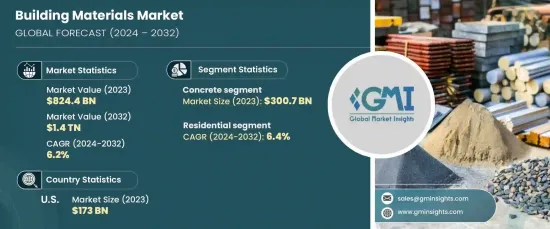
세계 건축 자재 시장은 2023년 8,244억 달러에 달했고, 2024-2032년까지 CAGR 6.2%로 확대될 것으로 예측되고 있습니다.
이러한 성장을 뒷받침하는 것은 혁신적이고 지속 가능한 솔루션을 채택하는 프로젝트가 증가함에 따라 건축에서 스마트 소재의 통합이 진행되고 있다는 것입니다.
시장은 재료 유형별로 구분되며 주요 카테고리에는 콘크리트, 목재, 석조, 유리, 플라스틱, 세라믹, 스티로폼, 아스팔트 등이 포함됩니다. 그 중에서도 콘크리트는 2023년 3,007억 달러를 창출했으며, 계속해서 산업을 지배하고 있고, 2032년까지 CAGR 6.5%로 성장할 것으로 예상되고 있습니다. 타의 추종을 불허하는 내구성, 강도 및 비용 효과로 알려진 콘크리트는 주택, 상업용 빌딩, 도로, 다리 등에 필수적인 건물의 클래식입니다.
시장 범위
시작 연도
2023년
예측 연도
2024-2032년
시작 금액
8,244억 달러
예측 금액
1조 4,000억 달러
CAGR
6.2%
최종 용도의 관점에서 건축자재 시장은 주택, 상업, 산업 및 인프라의 각 부문으로 나뉩니다. 주택 부문은 2023년에 약 37%의 점유율로 시장을 선도했고, 예측 기간 중에는 CAGR 6.4%로 성장할 것으로 예측됩니다. 개발도상국의 도시화는 사람들이 새로운 집을 찾거나 기존 부동산을 업그레이드함으로써 주택 수요 증가를 이끌고 있습니다. 또한 주택 개조, 특히 주방, 욕실, 에너지 효율 개선도 시장 확대에 기여합니다. 게다가 지속가능한 건설 관행에 대한 관심 증가는 개발자들에게 친환경적인 재료의 선택을 촉구하고 있습니다. LEED와 BREEAM과 같은 그린 빌딩 인증이 각광받을수록 환경 친화적인 솔루션에 대한 수요가 계속 증가하고 있습니다.
북미에서는 미국 건축 자재 시장이 2023년에 1,730억 달러에 이르렀으며, 지역 시장의 대부분을 차지하고 있습니다. 이 시장은 인구 증가, 도시 개척, 대형 주택 지향 등의 요인에 따라 2024-2032년까지 CAGR 6.3%로 성장할 것으로 보입니다. 단독 주택 수요가 증가함에 따라 콘크리트, 목재, 철강, 단열재 등의 필수 재료의 요구는 계속 급증하고 시장 성장을 더욱 강화할 것입니다.
목차
제1장 조사 방법과 조사 범위
시장 범위와 정의
기본 추정과 계산
예측 계산
데이터 소스
1차 데이터
2차 자료
유료 정보원
공적 정보원
제2장 주요 요약
제3장 산업 인사이트
생태계 분석
밸류체인에 영향을 주는 요인
이익률 분석
변혁
미래의 전망
제조업체
유통업체
공급자의 상황
이익률 분석
주요 뉴스
규제 상황
영향요인
성장 촉진요인
도시화와 인구 증가
리폼과 리노베이션
산업의 잠재적 리스크 및 과제
원료 가격의 변동
잠재성장력 분석
Porter's Five Forces 분석
PESTEL 분석
제4장 경쟁 구도
소개
기업 점유율 분석
경쟁 포지셔닝 매트릭스
전략 전망 매트릭스
제5장 시장 추정·예측 : 재료 유형별, 2021-2032년
주요 동향
콘크리트
목재
석조
유리
플라스틱
세라믹
발포 스티롤
아스팔트
기타(복합재료 등)
제6장 시장 추정·예측 : 건설 유형별, 2021-2032년
주요 동향
신축
개수 및 보수
제7장 용도별 시장 추정·예측 : 용도별, 2021-2032년
주요 동향
구조재
마감재
단열재
제8장 시장 추정·예측 : 최종 용도별, 2021-2032년
주요 동향
주택용
업무용
산업용
인프라
제9장 시장 추정·예측 : 유통 채널별, 2021-2032년
주요 동향
직접
간접
제10장 시장 추정·예측 : 지역별, 2021-2032년
주요 동향
북미
미국
캐나다
유럽
영국
독일
프랑스
이탈리아
스페인
러시아
아시아태평양
중국
인도
일본
한국
호주
라틴아메리카
브라질
멕시코
중동 및 아프리카
아랍에미리트(UAE)
사우디아라비아
남아프리카
제11장 기업 프로파일
Anhui Conch Cement
Boral Limited
Cement Roadstone Holding
Cemex SAB de CV
China National Building Material Group Corporation
Etex Group
Heidelberg Materials
Holcim Group
James Hardie Industries plc
Kingspan Group
Martin Marietta Materials, Inc.
Owens Corning
Saint-Gobain
USG Corporation
Vulcan Materials Company
JHS
영문 목차
영문목차
The Global Building Materials Market reached USD 824.4 billion in 2023 and is projected to expand at a CAGR of 6.2% from 2024 to 2032. This growth is being fueled by the increasing integration of smart materials in construction as more projects adopt innovative, sustainable solutions.
The market is segmented by material type, with major categories including concrete, wood, masonry, glass, plastic, ceramic, spray foam, asphalt, and others. Among these, concrete continues to dominate the industry, generating USD 300.7 billion in 2023, and is expected to grow at a CAGR of 6.5% through 2032. Known for its unmatched durability, strength, and cost-effectiveness, concrete is a staple in construction essential for residential properties, commercial buildings, roads, bridges, and more.
Market Scope
Start Year
2023
Forecast Year
2024-2032
Start Value
$824.4 Billion
Forecast Value
$1.4 Trillion
CAGR
6.2%
In terms of end-use, the building materials market is divided into residential, commercial, industrial, and infrastructure sectors. The residential sector led the market with approximately 37% share in 2023 and is anticipated to grow at a CAGR of 6.4% during the forecast period. Urbanization in developing nations is driving the growing demand for housing as people seek new homes and upgrade their existing properties. Home renovations, especially kitchen, bathroom, and energy-efficient improvements, are also contributing to market expansion. Furthermore, the rising focus on sustainable construction practices is pushing developers to choose environmentally friendly materials. As green building certifications like LEED and BREEAM gain prominence, demand for eco-conscious solutions continues to rise.
In North America, the U.S. building materials market contributed USD 173 billion in 2023, a significant portion of the regional market. This market is set to grow at a CAGR of 6.3% between 2024 and 2032, driven by factors like population growth, urban development, and a preference for larger homes. As demand for single-family homes increases, the need for essential materials such as concrete, wood, steel, and insulation continues to surge, further boosting the market's growth.
Table of Contents
Chapter 1 Methodology & Scope
1.1 Market scope & definitions
1.2 Base estimates & calculations
1.3 Forecast calculations
1.4 Data sources
1.4.1 Primary
1.4.2 Secondary
1.4.2.1 Paid sources
1.4.2.2 Public sources
Chapter 2 Executive Summary
2.1 Industry synopsis, 2021-2032
Chapter 3 Industry Insights
3.1 Industry ecosystem analysis
3.1.1 Factor affecting the value chain
3.1.2 Profit margin analysis
3.1.3 Disruptions
3.1.4 Future outlook
3.1.5 Manufacturers
3.1.6 Distributors
3.2 Supplier landscape
3.3 Profit margin analysis
3.4 Key news & initiatives
3.5 Regulatory landscape
3.6 Impact forces
3.6.1 Growth drivers
3.6.1.1 Urbanization & population growth
3.6.1.2 Renovation and retrofit activities
3.6.2 Industry pitfalls & challenges
3.6.2.1 Fluctuating raw material prices
3.7 Growth potential analysis
3.8 Porter’s analysis
3.9 PESTEL analysis
Chapter 4 Competitive Landscape, 2023
4.1 Introduction
4.2 Company market share analysis
4.3 Competitive positioning matrix
4.4 Strategic outlook matrix
Chapter 5 Market Estimates & Forecast, By Material Type, 2021-2032 (USD Billion)
5.1 Key trends
5.2 Concrete
5.3 Wood
5.4 Masonry
5.5 Glass
5.6 Plastic
5.7 Ceramic
5.8 Spray foam
5.9 Asphalt
5.10 Others (composites, etc.)
Chapter 6 Market Estimates & Forecast, By Construction Type, 2021-2032 (USD Billion)