


세계 위성 케이블 및 어셈블리 시장은 2024년 3억 6,260만 달러로 평가되었으며, 2025-2034년까지 추정 CAGR 21.6%로 현저한 성장을 이루려고 합니다.
이러한 급성장의 배경은 위성 광대역 서비스의 확대로 인해 원격지나 서비스가 잘 되지 않는 지역에서 신뢰할 수 있는 고속 인터넷에 대한 수요가 높아질 수 있습니다. 통신, 미디어, 방어와 같은 주요 산업은 선진 위성 통신 네트워크에 대한 의존도를 높이고 있으며, 선진 케이블 및 조립 부품이 필요합니다. 특히 지역의 위성 기반 인터넷 서비스의 상승은 고속 데이터 전송을 지원할 수 있는 견고한 케이블 및 커넥터의 중요한 필요성을 강조합니다.
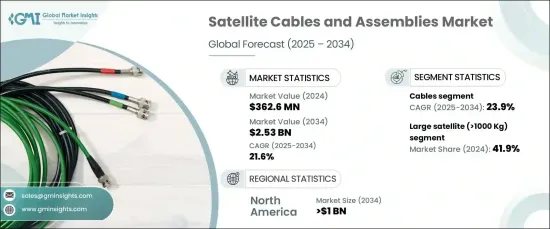
시장은 위성 유형에 따라 소형 위성(500kg까지), 중형 위성(501-1,000kg), 대형 위성(1,000kg 이상)으로 구분됩니다. 2024년에는 대형 위성이 41.9%의 점유율로 시장을 독점했습니다. 무게가 1,000kg 이상인 이 위성은 복잡한 통신, 지구관측, 과학 연구 임무에 필수적입니다. 이러한 위성은 배전, 데이터 전송 및 통신 서브시스템을 관리하기 위해 고성능 케이블 및 어셈블리가 필요합니다. 대형 위성의 배치가 진행됨에 따라 우주의 가혹한 조건을 견딜 수 있도록 설계된 튼튼한 경량 케이블에 대한 수요가 증가하고 있습니다.
| 시장 범위 | |
|---|---|
| 시작 연도 | 2024년 |
| 예측 연도 | 2025-2034년 |
| 시작 금액 | 3억 6,260만 달러 |
| 예측 금액 | 25억 3,000만 달러 |
| CAGR | 21.6% |
위성 케이블 및 조립 시장은 부품별로 케이블, 커넥터 및 기타로 분류됩니다. 예측 기간 동안 CAGR은 23.9%로 케이블 부문이 가장 빠르게 성장할 것으로 예상됩니다. 케이블은 위성 시스템에서 신뢰할 수 있는 전력과 데이터 전송을 보장하는 데 매우 중요한 역할을 합니다. 산업은 방사선, 극단적인 온도, 기계적 스트레스에 대한 내성 등 엄격한 성능 기준을 충족하는 제품 개발에 주력하고 있습니다. 위성 기술의 발전으로 우주 운영의 무결성을 유지하면서 고속 데이터 전송을 지원할 수 있는 유연하고 가볍고 내구성 있는 케이블이 필요합니다.
북미 위성 케이블 및 조립 시장은 2034년까지 10억 달러에 이를 것으로 예상되며, 미국이 이 성장의 최전선에 있습니다. 우주통신, 탐사, 위성 기반 서비스에 대한 투자 증가는 고성능 위성 네트워크를 지원하는 첨단 케이블 시스템 수요를 촉진하고 있습니다. 미국 정부의 이니셔티브와 민간 기업의 위성 발사에 참여하는 것은 혁신적인 위성 기술 개발을 뒷받침하고 있습니다. 위성 별자리와 광대역 구상의 확대는 이 역동적이고 빠르게 진화하는 시장에서 안정적이고 효율적이며 내구성 있는 케이블의 필요성을 더욱 강조하고 있습니다.
The Global Satellite Cables And Assemblies Market, valued at USD 362.6 million in 2024, is poised for remarkable growth with an estimated CAGR of 21.6% from 2025 to 2034. This surge is driven by the growing demand for reliable, high-speed internet in remote and underserved regions, fueled by the expansion of satellite broadband services. Key industries such as telecommunications, media, and defense increasingly rely on advanced satellite communication networks, necessitating sophisticated cable and assembly components. The rise of satellite-based internet services, particularly in rural areas, underscores the critical need for robust cables and connectors capable of supporting high data transfer speeds.
The market is segmented by satellite type into small satellites (up to 500 kg), medium satellites (501-1000 kg), and large satellites (over 1000 kg). In 2024, large satellites dominated the market with a 41.9% share. These satellites, often weighing over 1,000 kg, are vital for complex communication, Earth observation, and scientific research missions. They require high-performance cables and assemblies to manage power distribution, data transmission, and communication subsystems. The increasing deployment of large satellites drives demand for durable, lightweight cables engineered to withstand the harsh conditions of space.
| Market Scope | |
|---|---|
| Start Year | 2024 |
| Forecast Year | 2025-2034 |
| Start Value | $362.6 Million |
| Forecast Value | $2.53 Billion |
| CAGR | 21.6% |
By component, the satellite cables and assemblies market is categorized into cables, connectors, and others. The cables segment is projected to be the fastest-growing, with an impressive CAGR of 23.9% during the forecast period. Cables play a pivotal role in ensuring reliable power and data transmission within satellite systems. The industry is focused on developing products that meet stringent performance standards, including resistance to radiation, temperature extremes, and mechanical stress. Advances in satellite technology have amplified the need for flexible, lightweight, and durable cables capable of supporting high-speed data transfer while maintaining operational integrity in space.
North America satellite cables and assemblies market is expected to reach USD 1 billion by 2034, with the United States at the forefront of this growth. Increased investments in space communication, exploration, and satellite-based services are driving demand for advanced cable systems that support high-performance satellite networks. U.S. government initiatives and private sector participation in satellite launches are boosting the development of innovative satellite technologies. The expansion of satellite constellations and broadband initiatives further underscores the need for reliable, efficient, and durable cables in this dynamic and rapidly evolving market.