자동차용 오일 관리 모듈 시장 기회, 성장 촉진요인, 산업 동향 분석 및 예측(2025-2034년)
Automotive Oil Management Module Market Opportunity, Growth Drivers, Industry Trend Analysis, and Forecast 2025 - 2034
상품코드:1665072
리서치사:Global Market Insights Inc.
발행일:2024년 12월
페이지 정보:영문 240 Pages
라이선스 & 가격 (부가세 별도)
ㅁ Add-on 가능: 고객의 요청에 따라 일정한 범위 내에서 Customization이 가능합니다. 자세한 사항은 문의해 주시기 바랍니다.
한글목차
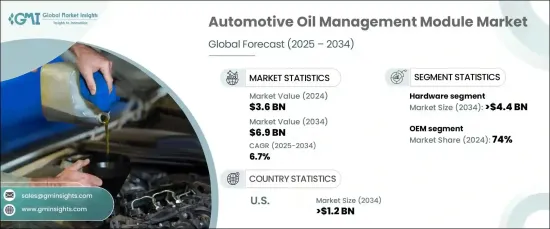
세계의 자동차용 오일 관리 모듈 시장은 2024년에 36억 달러로 평가되었고 2025년부터 2034년에 걸쳐 CAGR 6.7%로 강력한 성장을 이룰 전망입니다.
이 시장 확대는 세계의 승용차·상용차 수요의 급증으로 고도의 오일 관리 시스템의 요구가 높아지고 있는 것이 배경에 있습니다.
대기오염과 온실가스 배출에 대처하기 위해 각국 정부가 보다 엄격한 배출기준을 부과하는 가운데 자동차 제조업체는 이에 대응하기 위해 혁신적인 기술을 점점 더 도입하고 있습니다. 효율적인 오일 관리 시스템은 엔진 성능 최적화 및 배출 가스 감소에 매우 중요하며 차량이 최상의 효율을 유지하면서 엄격한 규제를 충족할 수 있도록 지원합니다. 이 모듈은 최신 자동차에서 최적의 엔진 기능과 지속가능성을 보장하는 데 필수적입니다.
시장 범위
시작 연도
2024년
예측 연도
2025-2034년
시작 금액
36억 달러
예측 금액
69억 달러
CAGR
6.7%
시장은 하드웨어, 소프트웨어, 서비스 등의 구성 요소별로 구분됩니다. 2024년에는 하드웨어 구성요소가 67%의 점유율을 차지했고 2034년까지 44억 달러를 창출할 것으로 예상됩니다. 오일 펌프, 센서, 필터, 밸브 등의 중요한 하드웨어 요소는 오일 유량, 압력, 여과, 온도 제어를 조정하는 데 필수적입니다. 이러한 부품은 엔진 성능 향상, 연비 향상, 배기 가스 규제 준수에 중요한 역할을 하며 업계의 핵심이 되고 있습니다.
또한 시장은 최종 용도별로 OEM 부문와 애프터마켓 부문으로 분류됩니다. OEM 부문은 2024년에 시장의 74%를 차지했습니다. 자동차 제조 시 통합되는 오일 관리 모듈은 고품질 기준을 충족하고 엔진 성능을 향상시키고 규제 요구 사항을 준수하는 데 중요한 역할을 합니다. 자동차 제조업체는 명성을 유지하고 고객에게 우수한 성능을 제공하기 위해 이러한 시스템에 의존합니다.
미국의 자동차용 오일 관리 모듈 시장은 2024년에 현저한 우위를 보여, 지역별 점유율의 87%를 차지했으며, 2034년에는 12억 달러 이상에 달할 것으로 예측됩니다. 이 리더십은 이 나라의 첨단 자동차 산업, 기술 혁신에 대한 강한 관심, 엄격한 연비 기준으로 인한 것입니다. 기술적으로 첨단 자동차에 대한 수요가 증가하고 연구개발에 많은 투자가 시장개발을 더욱 강화하고 있습니다. 지속가능성과 최첨단 솔루션에 뚜렷한 중점을 둔 미국은 첨단 오일 관리 모듈의 세계 채택의 주요 견인 역할을 계속하고 있습니다.
보고서 내용
제1장 조사 방법과 조사 범위
조사 디자인
조사 접근
데이터 수집 방법
기본 추정과 계산
기준연도의 산출
시장추계의 주요 동향
예측 모델
1차 조사와 검증
1차 정보
데이터 마이닝 소스
시장 정의
제2장 주요 요약
제3장 업계 인사이트
생태계 분석
기술 제공업체
부품 공급자
제조업체
OEM 제조업체
공급자의 상황
이익률 분석
기술 혁신의 상황
주요 뉴스와 대처
규제 상황
영향요인
성장 촉진요인
자동차 생산 대수와 보유 대수 증가
자동차 부품의 기술적 진보
연비 중시의 고조
유지보수 및 교환을 위한 애프터마켓 수요 증가
업계의 잠재적 위험 및 과제
고도 오일 관리 시스템의 높은 초기 비용
엄격한 규제 준수
성장 가능성 분석
Porter's Five Forces 분석
PESTEL 분석
제4장 경쟁 구도
서론
기업 점유율 분석
경쟁 포지셔닝 매트릭스
전략 전망 매트릭스
제5장 시장 추계·예측 : 구성 요소별(2021-2034년), 100만 달러
주요 동향
하드웨어
소프트웨어
서비스
제6장 시장 추계·예측 : 기능별(2021-2034년), 100만 달러
주요 동향
오일 압력 관리
오일 여과
오일 온도 제어
오일 흐름 모니터링
오일 흐름 관리
오일 품질 모니터링
통합 오일 시스템 관리
제7장 시장 추계·예측 : 최종 용도별(2021-2034년), 100만 달러
주요 동향
OEM
애프터마켓
제8장 시장 추계·예측 : 지역별(2021-2034년), 100만 달러
주요 동향
북미
미국
캐나다
유럽
영국
독일
프랑스
스페인
이탈리아
러시아
북유럽
아시아태평양
중국
인도
일본
한국
뉴질랜드
동남아시아
라틴아메리카
브라질
멕시코
아르헨티나
중동 및 아프리카
UAE
남아프리카
사우디아라비아
제9장 기업 프로파일
Aisin Seiki Co. Ltd.
BorgWarner Inc.
Bosch Mobility Solutions
Continental AG
Cummins Inc.
Delphi Technologies
DENSO Corporation
Eaton Corporation
Hella GmbH &Co. KGaA
Hengst SE
Hitachi Astemo
Hutchinson SA
Magna International
MAHLE GmbH
MANN HUMMEL
Nidec Corporation
Parker Hannifin
Schaeffler Group
Valeo
ZF Friedrichshafen AG
KTH
영문 목차
영문목차
The Global Automotive Oil Management Module Market, valued at USD 3.6 billion in 2024, is set to experience robust growth at a CAGR of 6.7% between 2025 and 2034. This expansion is fueled by the surging demand for passenger and commercial vehicles worldwide, creating a heightened need for advanced oil management systems.
As governments enforce stricter emission standards to combat air pollution and greenhouse gas emissions, automakers are increasingly integrating innovative technologies to comply. Efficient oil management systems are pivotal in optimizing engine performance and reducing emissions, helping vehicles meet stringent regulations while maintaining peak efficiency. These modules are indispensable for ensuring optimal engine functionality and sustainability in modern vehicles.
Market Scope
Start Year
2024
Forecast Year
2025-2034
Start Value
$3.6 Billion
Forecast Value
$6.9 Billion
CAGR
6.7%
The market is segmented by components, including hardware, software, and services. In 2024, hardware components dominated the market with a 67% share and are forecasted to generate USD 4.4 billion by 2034. Critical hardware elements such as oil pumps, sensors, filters, and valves are essential for regulating oil flow, pressure, filtration, and temperature control. These components play a vital role in enhancing engine performance, boosting fuel efficiency, and achieving compliance with emission regulations, making them a cornerstone of the industry.
Additionally, the market is categorized by end-use into OEM (Original Equipment Manufacturer) and aftermarket segments. The OEM segment captured 74% of the market in 2024, reflecting its prominence. Oil management modules integrated during vehicle manufacturing are instrumental in meeting high-quality standards, enhancing engine performance, and complying with regulatory requirements. Automakers rely on these systems to uphold their reputation and deliver superior performance to customers.
The U.S. automotive oil management module market showcased remarkable dominance in 2024, accounting for 87% of the regional share and is projected to surpass USD 1.2 billion by 2034. This leadership is attributed to the country's advanced automotive industry, strong focus on innovation, and stringent fuel economy standards. The rising demand for technologically advanced vehicles and significant investments in research and development further bolster market growth. With a clear emphasis on sustainability and cutting-edge solutions, the U.S. remains a key driver for the adoption of advanced oil management modules globally.
Report Content
Chapter 1 Methodology & Scope
1.1 Research design
1.1.1 Research approach
1.1.2 Data collection methods
1.2 Base estimates and calculations
1.2.1 Base year calculation
1.2.2 Key trends for market estimates
1.3 Forecast model
1.4 Primary research & validation
1.4.1 Primary sources
1.4.2 Data mining sources
1.5 Market definitions
Chapter 2 Executive Summary
2.1 Industry synopsis, 2021 - 2034
Chapter 3 Industry Insights
3.1 Industry ecosystem analysis
3.1.1 Technology providers
3.1.2 Component suppliers
3.1.3 Manufacturers
3.1.4 OEMs
3.2 Supplier landscape
3.3 Profit margin analysis
3.4 Technology & innovation landscape
3.5 Key news & initiatives
3.6 Regulatory landscape
3.7 Impact forces
3.7.1 Growth drivers
3.7.1.1 Increasing vehicle production and fleet size
3.7.1.2 Technological advancements in automotive components
3.7.1.3 Growing focus on fuel efficiency
3.7.1.4 Increasing aftermarket demand for maintenance and replacement
3.7.2 Industry pitfalls & challenges
3.7.2.1 High initial costs of advanced oil management systems