Global Biodegradable Fabrics Market, By Product Type, By Application, By End Use Industry, By Geography
상품코드:1707530
리서치사:Coherent Market Insights
발행일:2025년 03월
페이지 정보:영문
라이선스 & 가격 (부가세 별도)
ㅁ Add-on 가능: 고객의 요청에 따라 일정한 범위 내에서 Customization이 가능합니다. 자세한 사항은 문의해 주시기 바랍니다.
한글목차
생분해성 직물 세계 시장은 2025년에 58억 8,000만 달러로 추정되며, 2032년에는 136억 5,000만 달러에 달할 것으로 예상되며, 2025년부터 2032년까지 12.8%의 연평균 성장률을 기록할 것으로 예상됩니다.
보고서 범위
보고서 상세
기준 연도
2024년
2025년 시장 규모
58억 8,000만 달러
실적 데이터
2020-2024년
예측 기간
2025-2032년
예측 기간 : 2025-2032년 CAGR:
12.80%
2032년 가치 예측
136억 5,000만 달러
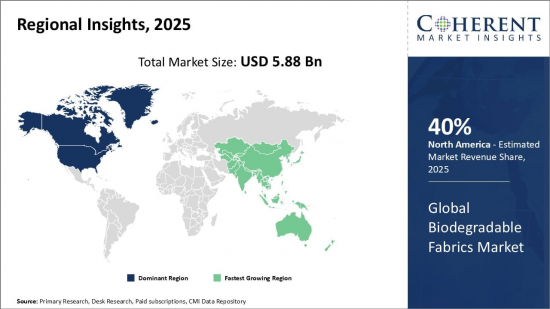
그림. 생분해성 직물 세계 시장 점유율(%), 지역별, 2025년
생분해성 직물은 최근 몇 년 동안 환경 오염과 폐기물에 대한 우려가 높아짐에 따라 기존의 섬유를 대체할 수 있는 지속가능한 섬유로 등장했습니다. 이 직물은 자연적으로 분해되도록 설계되어 환경에 미치는 영향을 줄이고 보다 지속가능한 미래로 나아갈 수 있는 길을 열어줍니다.
생분해성 직물의 개념은 유해한 잔류물을 남기지 않고 쉽게 분해할 수 있는 유기 소재를 사용하는 것을 중심으로 전개되고 있습니다. 이는 탄소발자국을 최소화하는 데 도움이 될 뿐만 아니라 매립지에 대한 부담도 줄일 수 있습니다. 지속가능성에 대한 소비자의 인식이 높아짐에 따라 생분해성 직물에 대한 수요는 꾸준히 증가하고 있습니다.
시장 역학:
생분해성 직물 시장은 환경 문제에 대한 관심 증가, 지속가능한 패션 트렌드, 친환경 섬유 제품에 대한 수요 증가 등 다양한 요인에 의해 주도되고 있습니다. 소비자들은 자신의 구매 결정이 환경에 미치는 영향에 대한 인식이 높아지고 있으며, 그 결과 지속가능하고 생분해 가능한 제품으로 전환하고 있습니다.
또한, 전 세계 여러 정부 및 환경 단체의 엄격한 규제와 정책은 생분해성 직물의 채택을 촉진하고 있습니다. 이러한 규제는 합성 소재의 사용을 줄이고 섬유 산업에서 지속가능한 관행을 촉진하는 것을 목표로 하고 있습니다.
그러나 이 시장은 일정한 도전에 직면해 있습니다. 주요 저해요인 중 하나는 기존 직물에 비해 생분해성 직물의 생산 비용이 높다는 것입니다. 이러한 비용 차이는 가격에 민감한 소비자들이 생분해성 직물을 선택하는 것을 주저하게 만들 수 있습니다. 원료의 가용성이 제한적이고 생분해성 직물에 대한 소비자의 인식이 낮다는 점도 시장 성장에 걸림돌로 작용하고 있습니다.
이러한 도전에도 불구하고 생분해성 직물 시장은 큰 성장 기회를 가지고 있습니다. 직물 제조 공정의 기술 발전과 혁신은 생산 비용을 낮추고 생분해성 직물의 가격을 낮춰 더 많은 소비자들이 생분해성 직물을 더 저렴하게 이용할 수 있도록 할 것으로 예상됩니다. 또한, 패션, 헬스케어, 가정용 가구 등 다양한 분야에서 지속가능한 섬유 제품에 대한 수요가 증가하고 있는 것도 시장 확대의 길을 열어주고 있습니다.
본 조사의 주요 특징
세계의 생분해성 직물 시장에 대해 조사 분석했으며, 2024년을 기준 연도로 하여 예측 기간(2025-2032년) 동안의 시장 규모와 연평균 성장률(CAGR)을 조사하여 전해드립니다.
또한, 다양한 부문에 걸친 잠재적인 수익 성장 기회를 밝히고, 이 시장의 매력적인 투자 제안 매트릭스를 설명합니다.
또한 시장 촉진요인, 억제요인, 기회, 신제품 출시 및 승인, 시장 동향, 지역별 전망, 주요 기업의 경쟁 전략 등에 대한 중요한 인사이트를 제공합니다.
이 보고서의 인사이트를 통해 기업의 마케팅 담당자와 경영진은 향후 제품 출시, 유형화, 시장 확대, 마케팅 전략에 대한 정보에 입각한 의사결정을 내릴 수 있습니다.
이 보고서는 투자자, 공급업체, 제품 제조업체, 유통업체, 신규 진입자, 재무 분석가 등 업계의 다양한 이해관계자를 대상으로 합니다.
이해관계자들은 세계 생분해성 직물 시장 분석에 사용되는 다양한 전략 매트릭스를 통해 의사결정을 쉽게 내릴 수 있습니다.
목차
제1장 조사 목적과 가정
조사 목적
가정
약어
제2장 시장 전망
보고서 설명
시장 정의와 범위
주요 요약
Coherent Opportunity Map(COM)
제3장 시장 역학, 규제, 동향 분석
시장 역학
패션 업계의 지속가능한 소재 채용 증가
기존 직물에 비해 비용이 높은
바이오 기반 직물 생산 확대
주요 하이라이트
규제 시나리오
최근 동향
제품 발매/승인
PEST 분석
PORTER의 분석
합병, 인수 및 제휴
제4장 생분해성 직물 시장 - 코로나바이러스(COVID-19) 팬데믹의 영향
COVID-19 역학
공급측과 수요측 분석
경제에 대한 영향
제5장 생분해성 직물 시장, 제품 유형별, 2020-2032년
폴리에스테르
폴리젖산(PLA)
셀룰로오스
천연섬유
기타(폴리하이드록시알카노에이트 등)
제6장 생분해성 직물 시장, 용도별, 2020-2032년
섬유
가구
카펫
기타(포장, 농업 등)
제7장 생분해성 직물 시장, 최종 이용 산업별, 2020-2032년
패션
의료
스포츠웨어
농업
토목공학
기타(포장, 자동차 등)
제8장 생분해성 직물 시장, 지역별, 2020-2032년
북미
유럽
아시아태평양
라틴아메리카
중동 및 아프리카
제9장 경쟁 구도
기업 개요
Ecologic Fiber
Enka Textile
Hemp Inc.
David C. Poole
Eco Textile
Propex
Greenfibres
EnviroTextiles
Vestagen Protective Technologies
WL Gore &Associates
Taiwan Singtex Industrial Company
Tengri
Bcomp
Flexform Technologies
Aquafi
Eucarpe
Toad& Co
Amadou Naturals
Back Beat Co.
SynZenta
제10장 섹션
참고문헌
조사 방법
출판사 소개
ksm
영문 목차
영문목차
Global Biodegradable Fabrics Market is estimated to be valued at USD 5.88 Bn in 2025 and is expected to reach USD 13.65 Bn by 2032, growing at a compound annual growth rate (CAGR) of 12.8% from 2025 to 2032.
Report Coverage
Report Details
Base Year:
2024
Market Size in 2025:
USD 5.88 Bn
Historical Data for:
2020 To 2024
Forecast Period:
2025 To 2032
Forecast Period 2025 to 2032 CAGR:
12.80%
2032 Value Projection:
USD 13.65 Bn
Figure. Global Biodegradable Fabrics Market Share (%), By Region 2025
Biodegradable fabrics have emerged as a sustainable alternative to conventional fabrics in recent years, addressing the growing concerns regarding environmental pollution and waste. These fabrics are designed to break down naturally, thus reducing their impact on the environment and paving the way for a more sustainable future.
The concept of biodegradable fabrics revolves around the use of organic materials that can easily decompose without leaving behind harmful residues. This not only helps in minimizing the carbon footprint but also reduces the burden on landfills. As consumer awareness about sustainability increases, the demand for biodegradable fabrics is experiencing a steady rise.
Market Dynamics:
The biodegradable fabrics market is driven by various factors including increasing environmental concerns, the rise in sustainable fashion trends, and the growing demand for eco-friendly textiles. Consumers are becoming more conscious about the environmental impact of their purchasing decisions, thereby leading to a shift towards sustainable and biodegradable products.
Furthermore, stringent regulations and policies imposed by various governments and environmental organizations worldwide are encouraging the adoption of biodegradable fabrics. These regulations aim to reduce the use of synthetic materials and promote sustainable practices in the textile industry.
However, the market also faces certain challenges. One of the primary restraints is the higher cost of production that is associated with biodegradable fabrics as compared to traditional fabrics. This cost differential can deter price-sensitive consumers from choosing biodegradable options. Limited availability of raw materials and the lack of awareness about biodegradable fabrics among consumers pose challenges for market growth.
Despite these challenges, the biodegradable fabrics market presents significant opportunities for growth. Technological advancements and innovations in fabric manufacturing processes are expected to drive down the production costs, thus making biodegradable fabrics more affordable and accessible to a broader consumer base. Moreover, the growing demand for sustainable textiles in various sectors such as fashion, healthcare, and home furnishings opens up avenues for market expansion.
Key Features of the Study:
This report provides an in-depth analysis of the global biodegradable fabrics market, including market size (US$ Bn) and compound annual growth rate (CAGR %) for the forecast period (2025-2032), considering 2024 as the base year
It elucidates potential revenue growth opportunities across different segments and explains attractive investment proposition matrices for this market
This study also provides key insights about market drivers, restraints, opportunities, new product launches or approval, market trends, regional outlook, and competitive strategies adopted by key players
Key companies covered as a part of this study include Ecologic Fiber, Enka Textile, Hemp Inc, David C. Poole, Eco Textile, Propex, Greenfibres, EnviroTextiles, Vestagen Protective Technologies, W.L. Gore & Associates, Taiwan Singtex Industrial Company, Tengri, Bcomp, Flexform Technologies, Aquafi, Eucarpe, Toad&Co, Amadou Naturals, Back Beat Co., and SynZenta
Insights from this report would allow marketers and management authorities of the companies to make informed decisions regarding their future product launches, type up-gradation, market expansion, and marketing tactics
The global biodegradable fabrics market report caters to various stakeholders in this industry, including investors, suppliers, product manufacturers, distributors, new entrants, and financial analysts
Stakeholders would have ease in decision-making through various strategy matrices used in analyzing the global biodegradable fabrics market
Detailed Segmentation:
By Product Type
Polyester
Polylactic Acid (PLA)
Cellulose
Natural Fiber
Others (Polyhydroxyalkanoates, etc.)
By Application
Textile
Furniture
Carpets
Others (Agriculture, etc.)
By End Use Industry
Fashion
Medical
Sportswear
Agriculture
Civil Engineering
Others (Packaging, Automotive, etc.)
By Region
North America
Europe
Asia Pacific
Latin America
Middle East and Africa
Company Profiles
Ecologic Fiber
Hemp Inc
David C. Poole
Eco Textile
Propex
Greenfibres
EnviroTextiles
Vestagen Protective Technologies
W.L. Gore & Associates
Taiwan Singtex Industrial Company
Tengri
Bcomp
Flexform Technologies
Aquafi
Eucarpe
Toad&Co
Amadou Naturals
Back Beat Co.
SynZenta
Table of Contents
1. Research Objectives and Assumptions
Research Objectives
Assumptions
Abbreviations
2. Market Purview
Report Description
Market Definition and Scope
Executive Summary
Biodegradable Fabrics Market, By Product Type
Biodegradable Fabrics Market, By Application
Biodegradable Fabrics Market, By End Use Industry
Biodegradable Fabrics Market, By Region
Coherent Opportunity Map (COM)
3. Market Dynamics, Regulations, and Trends Analysis
Market Dynamics
Drivers
Increasing adoption of sustainable materials in fashion industry
Restraints
High costs compared to conventional fabrics
Opportunities
Scaling up production of bio-based fabrics
Key Highlights
Regulatory Scenario
Recent Trends
Product Launches/Approvals
PEST Analysis
PORTER's Analysis
Mergers, Acquisitions, and Collaborations
4. Biodegradable Fabrics Market - Impact of Coronavirus (COVID-19) Pandemic