


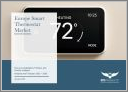
유럽의 스마트 서모스탯 시장 규모는 2025년 12억 9,410만 달러에서 2035년까지 68억 1,430만 달러에 달할 것으로 예측되고 있으며, 2025-2035년의 예측 기간에 CAGR 18.07%로 성장할 전망입니다.
유럽의 스마트 온도조절기 시장은 에너지 가격 상승, 엄격한 에너지 효율 규제, 스마트홈 기술 보급 확대를 배경으로 꾸준히 성장하고 있습니다. 스마트 온도 조절기는 난방 소비 최적화, 사용자 편의성 향상, 저탄소 건축 목표 달성을 지원하며 현대 주거 및 상업용 에너지 관리 시스템에서 필수적인 구성 요소로 자리 잡고 있습니다.
| 주요 시장 통계 | |
|---|---|
| 예측 기간 | 2025-2035년 |
| 2025년 시점의 평가 | 12억 9,410만 달러 |
| 2035년 예측 | 68억 1,430만 달러 |
| CAGR | 18.07% |
시장 개요
유럽의 스마트 온도조절기 시장은 에너지 효율이 높은 저탄소 건물로의 전환이 가속화되면서 강력한 성장세를 보이고 있습니다. 스마트 온도조절기는 연결성, 자동화, 데이터 분석을 활용하여 냉난방 시스템을 최적화하는 첨단 온도 제어 장치입니다. 난방이 가정 에너지 소비의 대부분을 차지하는 유럽에서는 이러한 솔루션이 에너지 낭비를 줄이고 편안함을 향상시키는 데 중요한 역할을 하고 있습니다.
시장 성장은 주로 에너지 비용 상승, 적극적인 기후 목표, 온실 가스 배출량 감축을 위한 엄격한 건축 기준에 의해 주도되고 있습니다. 에너지 성능 건축 지침(EPBD)과 같은 규정에 따라 신축 및 개보수 프로젝트 모두에서 지능형 난방 제어 장치의 사용이 권장되고 있습니다. 그 결과, 스마트 온도조절기는 단순한 선택적 스마트 가전제품이 아니라 현대 에너지 관리 시스템의 중요한 구성 요소로 점점 더 인식되고 있습니다.
또한 기술 개발이 시장 형성에 영향을 미치고 있습니다. 인공지능(AI)과 머신러닝을 통합한 스마트 온도조절기는 사용자의 취향, 거주 동향, 기상 조건을 학습할 수 있습니다. 이를 통해 자동적이고 예측 가능한 온도 조절이 가능합니다. 스마트 그리드와의 연결성은 수요반응과 에너지 절약 프로그램을 촉진하는 한편, 음성비서 및 스마트홈 생태계와의 호환성 향상도 소비자의 관심을 높이고 있습니다.
도입률은 서유럽과 북유럽, 특히 독일, 영국, 프랑스, 북유럽 국가에서 가장 높은데, 이는 높은 스마트홈 보급률과 엄격한 규제 집행에 기인합니다. 그러나 인지도가 높아지고 리노베이션 활동이 가속화됨에 따라 남유럽과 동유럽 전역에 걸쳐 성장 전망이 확대되고 있습니다. 전반적으로 유럽의 스마트 온도조절기 시장은 단순한 원격 제어 기능에서 디지털 빌딩 관리, 비용 절감, 지속가능성을 촉진하는 첨단 데이터베이스 시스템으로 전환하고 있습니다.
시장 세분화:
세분화 1: 용도별
세분화 2: 제품 유형별
세분화 3: 기술/연결성별
세분화 4: 지역별 세분화
유럽 스마트 서모스탯 시장 동향, 시장 성장 촉진요인 및 과제
시장 동향
주요 시장 성장 촉진요인
주요 과제
제품/혁신 전략: 이 보고서는 진화하는 유럽 스마트 서모스탯 시장에 대한 종합적인 인사이트을 제공하여 에너지 효율, 커넥티드 홈 솔루션, 지능형 HVAC 관리에 대한 수요 증가에 맞추어 제품 전략을 조정할 수 있도록 도와줍니다. 지원합니다. AI 기반 예측 온도 제어, 거주 상황에 따른 적응형 스케줄링, IoT 지원 원격 모니터링, 다중 구역 HVAC 통합, 음성 비서 및 빌딩 관리 플랫폼과의 호환성 등 혁신 기술을 검증합니다. 이러한 기술들은 에너지 최적화 향상, 사용자 편의성 향상, 전력 수요반응 프로그램 및 그리드 연계 프로그램 참여를 가능하게 함으로써 스마트 온도조절기의 영역을 재구축하고 있습니다. 이 보고서는 주거, 상업 및 산업 용도에 걸쳐 모듈식, 확장성 및 상호운용성이 뛰어난 온도조절기 솔루션을 강조함으로써 HVAC, 스마트홈 및 에너지 절약 시장 이해관계자들의 R&D 계획, 플랫폼 개발, 장기적인 제품 및 혁신 로드맵을 지원합니다. 혁신 로드맵을 지원합니다.
성장 및 마케팅 전략: 유럽 스마트 서모스탯 시장은 기기 제조업체, 유틸리티, 빌딩 자동화 프로바이더, 기술 통합업체에게 큰 성장 기회를 제공합니다. 이 시장을 주도하는 주요 전략으로는 대규모 주택 도입, 상업용 리노베이션 프로그램, 유틸리티 주도의 인센티브 정책, 신흥 지역으로의 지역적 확장 등이 있습니다. 기업은 디바이스 기능과 고객 참여를 강화하기 위해 AI 기반 학습 알고리즘, 클라우드 지원 제어 플랫폼, 에너지 관리 통합, 고급 분석 기술에 대한 투자를 확대하고 있습니다. 스마트홈 보급 확대, 건물 효율화에 대한 규제 요건, 지속가능성 및 에너지 절약에 대한 소비자의 관심 증가로 시장 성장이 가속화되고 있습니다. 이러한 추세에 따라 조직은 여러 최종사용자층에게 가치를 제공하고, 타겟팅된 마케팅 캠페인, 새로운 서비스 제공, 에너지 관리 솔루션을 개발할 수 있게 됩니다.
경쟁 전략: 이 보고서는 스마트 서모스탯 생태계에 참여하는 주요 업체(기기 제조업체, HVAC 솔루션 프로바이더, 소프트웨어 개발자, 유틸리티 프로그램 파트너)를 분석합니다. 경쟁 구도에서는 제품 차별화, 기술 통합, 유틸리티 및 스마트홈 플랫폼과의 제휴, 고성장 지역으로의 진출이 강조되고 있습니다. 이 분석을 통해 이해관계자들은 신흥 시장 부문 식별, 경쟁 포지셔닝 최적화, 혁신, 지역 확장, 규제 대응, 고객 중심 솔루션을 통한 성장을 추구할 수 있습니다. 에너지 효율, 커넥티드 디바이스, 지능형 HVAC 시스템이 가정과 기업에 점점 더 중요해지면서 AI 기능, 상호 운용성, 빌딩 관리 시스템과의 통합, 그리고 대규모의 측정 가능한 에너지 절감 및 쾌적성 이점을 제공할 수 있는 능력에 대한 경쟁이 치열해지고 있습니다.
주요 시장 진출기업 및 경쟁사 요약
유럽 스마트 서모스탯 시장에서 프로파일 대상 기업은 주요 전문가들의 정보 수집을 바탕으로 선정되었습니다. 전문가들은 각 기업의 사업 범위, 제품 포트폴리오, 시장 침투도를 분석합니다.
시장의 주요 기업의 일부는 다음과 같습니다. :
This report can be delivered in 2 working days.
Introduction to Europe Smart Thermostat Market
The Europe smart thermostat market is projected to reach $6,814.3 million by 2035 from $1,294.1 million in 2025, growing at a CAGR of 18.07% during the forecast period 2025-2035. The Europe smart thermostat market is expanding steadily, driven by rising energy prices, strict energy efficiency regulations, and increasing adoption of smart home technologies. Smart thermostats help optimize heating consumption, improve user comfort, and support low-carbon building goals, making them an essential component of modern residential and commercial energy management systems.
| KEY MARKET STATISTICS | |
|---|---|
| Forecast Period | 2025 - 2035 |
| 2025 Evaluation | $1,294.1 Million |
| 2035 Forecast | $6,814.3 Million |
| CAGR | 18.07% |
Market Introduction
The Europe smart thermostat market is experiencing strong growth as the region accelerates its transition toward energy-efficient, low-carbon buildings. Smart thermostats are advanced temperature control devices that use connectivity, automation, and data analytics to optimize heating and cooling systems. In Europe, where space heating accounts for a significant share of household energy consumption, these solutions play a critical role in reducing energy waste and improving comfort.
Growth in the market is mostly being driven by growing energy costs, aggressive climate goals, and strict construction codes aimed at cutting greenhouse gas emissions. Intelligent heating controls are encouraged to be used in both new construction and restoration projects by regulations like the Energy Performance of Buildings Directive (EPBD). As a result, smart thermostats are increasingly seen as crucial parts of contemporary energy management systems rather than as optional smart home appliances.
The market is being further shaped by technological developments. Smart thermostats may learn user preferences, occupancy trends, and weather conditions by integrating artificial intelligence and machine learning. This allows for automated and predictive temperature adjustments. While connectivity with smart grids facilitates demand response and energy efficiency programs, compatibility with voice assistants and smart home ecosystems has also increased consumer attractiveness.
Adoption is highest in Western and Northern Europe, particularly Germany, the United Kingdom, France, and the Nordic countries, owing to higher smart home penetration and stricter regulatory enforcement. Nonetheless, as awareness rises and retrofit activity quickens, growth prospects are appearing throughout Southern and Eastern Europe. In general, the market for smart thermostats in Europe is changing from simple remote-control options to sophisticated, data-driven systems that promote digital building management, cost savings, and sustainability.
Market Segmentation:
Segmentation 1: by Application
Segmentation 2: by Product Type
Segmentation 3: by Technology/Connectivity
Segmentation 4: by Region
Europe Smart Thermostat Market Trends, Drivers and Challenges
Market Trends
Key Market Drivers
Major Challenges
How can this report add value to an organization?
Product/Innovation Strategy: This report provides comprehensive insights into the evolving Europe smart thermostat market, helping organizations align their product strategies with the growing demand for energy efficiency, connected home solutions, and intelligent HVAC management. It examines innovations such as AI-driven predictive temperature control, occupancy-based adaptive scheduling, IoT-enabled remote monitoring, multi-zone HVAC integration, and compatibility with voice assistants and building management platforms. These technologies are reshaping the smart thermostat landscape by improving energy optimization, enhancing user comfort, and enabling participation in utility demand-response and grid-interactive programs. By highlighting modular, scalable, and interoperable thermostat solutions across residential, commercial, and industrial applications, the report supports R&D planning, platform development, and long-term product innovation roadmaps for stakeholders in HVAC, smart home, and energy-efficiency markets.
Growth/Marketing Strategy: The Europe smart thermostat market presents significant growth opportunities for device manufacturers, utilities, building automation providers, and technology integrators. Key strategies driving this market include large-scale residential deployments, commercial retrofit programs, utility-led incentive initiatives, and geographic expansion into emerging regions. Companies are increasingly investing in AI-based learning algorithms, cloud-enabled control platforms, energy-management integrations, and advanced analytics to enhance device functionality and customer engagement. Rising adoption of smart homes, regulatory mandates for building efficiency, and consumer interest in sustainability and energy savings are accelerating market growth. These trends enable organizations to develop targeted marketing campaigns, new service offerings, and energy-management solutions that capture value across multiple end-user segments.
Competitive Strategy: The report profiles leading players in the smart thermostat ecosystem, including device manufacturers, HVAC solution providers, software developers, and utility program partners. The competitive landscape emphasizes product differentiation, technology integration, partnerships with utilities and smart home platforms, and expansion into high-growth regions. This analysis enables stakeholders to identify emerging market segments, refine competitive positioning, and pursue growth through innovation, geographic expansion, regulatory alignment, and customer-focused solutions. As energy efficiency, connected devices, and intelligent HVAC systems become increasingly critical for homes and businesses, competition is intensifying around AI capabilities, interoperability, integration with building management systems, and the ability to deliver measurable energy savings and comfort benefits at scale.
Key Market Players and Competition Synopsis
The companies that are profiled in the Europe smart thermostat market have been selected based on inputs gathered from primary experts, who have analyzed company coverage, product portfolio, and market penetration.
Some of the prominent names in the market are:
Scope and Definition