



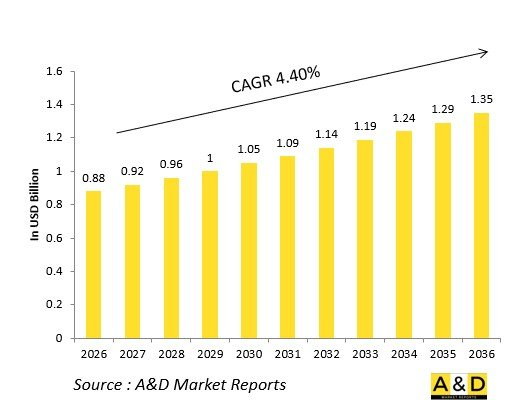
세계의 방위용 예항식 어레이 소나 시장 규모는 2026년 8억 8,000만 달러에서 2026-2036년의 예측 기간 중 CAGR 4.40%로 성장하며, 2036년에는 13억 5,000만 달러에 달할 것으로 전망되고 있습니다.
수중 전술의 복잡성과 대잠수함 작전의 전략적 중요성이 증가함에 따라 전 세계 국방용 견인식 어레이 소나 시장은 강한 성장세를 보이고 있습니다. 수상함정이나 잠수함에 탑재되는 견인식 어레이 소나는 장거리 음향 감지, 위협 추적, 전술적 상황 인식에 매우 중요한 역할을 합니다. 해양 강대국들이 해군 함대를 확장함에 따라 유연성과 고성능을 겸비한 소나 시스템에 대한 수요는 계속 증가하는 추세입니다. 디지털 신호 처리 기술, 광섬유 기술, 저잡음 트랜스듀서 어레이의 발전으로 감지 거리와 신뢰성이 크게 향상되었습니다. 이러한 시스템을 전투 관리 네트워크와 통합함으로써 플랫폼 간 실시간 데이터 공유가 가능해져 네트워크화된 해군 작전의 개념이 강화되고 있습니다. 각국이 해양 영역 인식과 수중 보안을 우선시하는 가운데, 광범위한 국방 현대화 프로그램과 음향 정보 수집 및 수중 억제력에 대한 관심이 높아짐에 따라 견인식 어레이 소나 시장은 꾸준히 확대될 것으로 예측됩니다.
국방용 견인식 어레이 소나에 미치는 기술적 영향
새로운 기술은 국방용 견인식 어레이 소나 시스템의 설계와 기능을 재구성하고 있습니다. 현대 시스템은 첨단 하이드로폰 어레이, 디지털 빔 포밍, 머신러닝 알고리즘을 채택하여 감지 정확도를 향상시키고 오경보를 줄입니다. 광섬유 센싱과 연결성 향상으로 신호 손실을 최소화한 실시간 데이터 전송이 가능해져 심해역과 얕은 해역을 막론하고 감시 능력을 강화하고 있습니다. 소형화 및 모듈화 추세는 배치의 유연성을 향상시키고, 여러 함종 및 무인수상정과의 통합을 가능하게 하고 있습니다. 개방형 아키텍처 프레임워크를 채택하여 시스템 업그레이드를 간소화하고, 다른 해군 센서 및 음향 플랫폼과의 상호 운용성을 향상시켰습니다. 노이즈 감소 기술과 적응형 신호 필터링을 통해 선박 교통량이 많은 해상 환경에서도 지속적인 성능을 발휘합니다. 국방 기관이 다중 정적 및 분산형 센싱 네트워크 구축을 추진하고 있는 가운데, 차세대 해군 아키텍처에서 견인식 어레이 소나는 핵심 수중 상황 인식 자산으로서 그 역할이 계속 확대되고 있습니다.
방산용 견인식 어레이 소나의 주요 추진요인
세계 견인형 어레이 소나 시장의 성장을 가속하는 전략적 및 운영적 요인은 여러 가지가 있습니다. 잠수함의 확산과 적대국 해군의 스텔스 능력 향상으로 인해 장거리에서 운용할 수 있는 첨단 감지 시스템이 필수적입니다. 현대의 해군 전술은 지속적인 수중 감시와 신속한 대응을 중시하고 있으며, 고감도 음향 어레이에 대한 투자를 촉진하고 있습니다. 수상함대와 잠수함의 지속적인 현대화도 견인식 소나 기술의 꾸준한 도입을 지원하고 있습니다. 데이터 융합과 네트워크 중심 전술의 중요성이 커지면서 소나 어레이와 전투 시스템, 자율 수중 탐사선(AUV)과의 통합이 진행되고 있습니다. 또한 정부 주도의 국산 센서 생산 촉진책과 기술이전 협약으로 신흥 시장에서의 산업 참여가 확대되고 있습니다. 해상 영역 인식의 필요성 증가와 더불어 정숙성과 성능이 향상된 소나 설계의 개발이 진행됨에 따라 세계 해군 방어 전략에서 견인식 어레이 솔루션에 대한 수요는 앞으로도 지속될 것으로 예측됩니다.
방산용 견인식 어레이 소나의 지역별 동향
견인식 어레이 소나의 지역별 시장 동향은 각 지역의 방위 태세, 산업 역량, 해양상 과제의 차이를 반영하고 있습니다. 북미에서는 첨단 대잠수함전 프로그램에서 견인 어레이 센서와 수상함 및 잠수함 함대의 통합에 중점을 두고 있습니다. 유럽에서는 동맹국 해군 간의 음향 감지 효율과 모듈식 상호운용성 향상을 위한 공동 연구 프로젝트에 중점을 두고 있습니다. 아시아태평양에서는 영토 분쟁과 해군 현대화 노력을 배경으로 각국이 수중 감시 네트워크를 확대하는 가운데 수요가 증가하고 있습니다. 중동에서는 연안 및 심해역 안보에 대한 투자가 중심이 되고 있으며, 세계 시스템 프로바이더와의 파트너십을 통해 지원되고 있습니다. 라틴아메리카와 아프리카의 신흥 시장에서는 대외 원조와 함대 강화 프로그램을 통해 견인식 소나 기술의 도입이 점차 진행되고 있습니다. 모든 지역에서 통합된 수중 방어 생태계에 대한 강조가 조달 전략을 형성하고 있으며, 이는 견인식 어레이 시스템이 현대 해양 안보에 필수적인 요소라는 점을 강조하고 있습니다.
세계의 국방용 견인식 어레이 소나(Array Sonar) 시장을 조사했으며, 주요 동향, 시장 영향요인, 주요 기술 및 그 영향력, 주요 지역 및 국가별 동향, 시장 기회 분석 등의 정보를 정리하여 전해드립니다.
The Global defense towed array sonar market is estimated at USD 0.88 billion in 2026, projected to grow to USD 1.35 billion by 2036 at a Compound Annual Growth Rate (CAGR) of 4.40% over the forecast period 2026-2036.
The global defense towed array sonar market is experiencing strong momentum driven by the increasing complexity of undersea warfare and the strategic importance of anti-submarine operations. Towed array sonars, mounted on surface vessels and submarines, play a vital role in long-range acoustic detection, threat tracking, and tactical situational awareness. As maritime powers expand their naval fleets, the demand for flexible and high-performance sonar systems continues to rise. Advances in digital signal processing, fiber-optic technology, and low-noise transducer arrays have significantly enhanced detection ranges and reliability. Integration of these systems with combat management networks enables real-time data sharing across platforms, reinforcing the concept of networked naval operations. With nations prioritizing maritime domain awareness and underwater security, the towed array sonar market is set to expand steadily, supported by extensive defense modernization programs and increasing focus on acoustic intelligence collection and undersea deterrence.
Technology Impact in Defense Towed Array Sonars
Emerging technologies are reshaping the design and functionality of defense towed array sonar systems. Modern systems employ advanced hydrophone arrays, digital beamforming, and machine learning algorithms for enhanced detection precision and reduced false alarms. Fiber-optic sensing and improved connectivity allow real-time data transmission with minimal signal loss, strengthening surveillance capabilities in deep and shallow waters alike. Miniaturization and modular design trends have improved deployment flexibility, allowing integration across multiple ship classes and unmanned surface vessels. The adoption of open architecture frameworks simplifies system upgrades and enhances interoperability with other naval sensors and acoustic platforms. Noise reduction technologies and adaptive signal filtering enable sustained performance in high-traffic maritime environments. As defense organizations push for multi-static and distributed sensing networks, the role of towed array sonars as core underwater awareness assets continues to expand in next-generation naval architectures.
Key Drivers in Defense Towed Array Sonars
Several strategic and operational drivers are fueling growth in the global towed array sonar market. Rising submarine proliferation and the increasing stealth capabilities of adversarial navies necessitate advanced detection systems capable of operating across extended ranges. Modern naval doctrines emphasize persistent undersea surveillance and rapid response, encouraging investment in high-sensitivity acoustic arrays. Ongoing modernization of surface fleets and submarines also supports steady adoption of towed sonar technology. The growing importance of data fusion and network-centric warfare drives integration between sonar arrays, combat systems, and autonomous underwater vehicles. Additionally, government initiatives promoting indigenous sensor production and technology transfer agreements are expanding industrial participation across emerging markets. The increasing need for maritime domain awareness, combined with the development of quieter, more capable sonar designs, ensures continued demand for towed array solutions across global naval defense strategies.
Regional Trends in Defense Towed Array Sonars
Regional market patterns in towed array sonars reflect varying defense postures, industrial capabilities, and maritime challenges. In North America, advanced anti-submarine warfare programs emphasize integration of towed array sensors with surface ship and submarine fleets. Europe's focus lies in collaborative research projects aimed at enhancing acoustic detection efficiency and modular interoperability among allied naval forces. The Asia-Pacific region demonstrates strong demand as nations expand their undersea surveillance networks amid rising territorial tensions and naval modernization efforts. In the Middle East, investment centers on coastal and deep-water security, supported by partnerships with global system providers. Emerging markets in Latin America and Africa are gradually adopting towed sonar technologies through foreign assistance and fleet enhancement programs. Across all regions, the emphasis on integrated undersea defense ecosystems continues to shape procurement strategies, highlighting towed array systems as essential components of modern maritime security.
Key Defense Towed Array Sonars Programs
Key defense programs worldwide are advancing the design, production, and deployment of next-generation towed array sonar systems. Major naval forces and industry leaders are collaborating to develop long-range, high-sensitivity arrays integrated with combat management and anti-submarine warfare frameworks. Several upgrade initiatives focus on retrofitting existing vessels with digital processing modules, fiber-optic links, and enhanced hydrophone configurations to improve performance and maintain interoperability. International cooperative programs emphasize shared research and development to reduce costs and accelerate delivery timelines. Many emerging defense nations are pursuing indigenous sonar production capabilities through technology transfer agreements and local manufacturing partnerships. These programs collectively signify a global trend toward resilient, low-drag, and energy-efficient arrays optimized for both manned and unmanned naval platforms. The continuous evolution of these systems underscores their pivotal role in sustaining undersea dominance and maritime strategic deterrence.
By Region
By Platform
By Deployment
By Array Type
The 10-year Defense Towed Array Sonars Market analysis would give a detailed overview of Defense Towed Array Sonars Market growth, changing dynamics, technology adoption overviews and the overall market attractiveness is covered in this chapter.
Market Technologies of Defense Towed Array Sonars Market
This segment covers the top 10 technologies that is expected to impact this market and the possible implications these technologies would have on the overall market.
The 10-year Defense Towed Array Sonars Market forecast of this market is covered in detailed across the segments which are mentioned above.
The regional counter drone market trends, drivers, restraints and Challenges of this market, the Political, Economic, Social and Technology aspects are covered in this segment. The market forecast and scenario analysis across regions are also covered in detailed in this segment. The last part of the regional analysis includes profiling of the key companies, supplier landscape and company benchmarking. The current market size is estimated based on the normal scenario.
North America
Drivers, Restraints and Challenges
PEST
Key Companies
Supplier Tier Landscape
Company Benchmarking
Europe
Middle East
APAC
South America
This chapter deals with the key defense programs in this market, it also covers the latest news and patents which have been filed in this market. Country level 10 year market forecast and scenario analysis are also covered in this chapter.
US
Defense Programs
Latest News
Patents
Current levels of technology maturation in this market
Canada
Italy
France
Germany
Netherlands
Belgium
Spain
Sweden
Greece
Australia
South Africa
India
China
Russia
South Korea
Japan
Malaysia
Singapore
Brazil
The opportunity matrix helps the readers understand the high opportunity segments in this market.
Expert Opinions on Defense Towed Array Sonars Market Report
Hear from our experts their opinion of the possible analysis for this market.
About Aviation and Defense Market Reports