



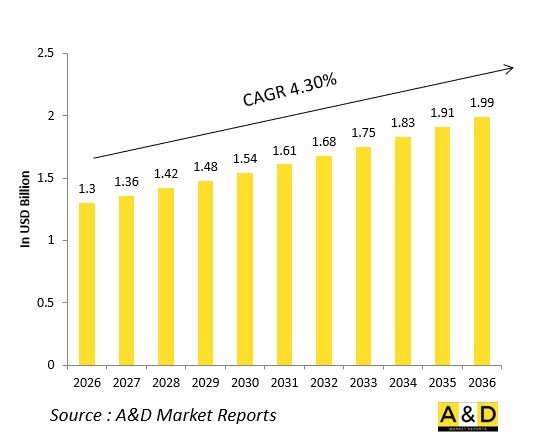
세계의 방위용 삼차원 대공 수색 레이더 시장 규모는 2026년 13억 달러에서 2026-2036년의 예측 기간 중 CAGR 4.30%로 성장하며, 2036년에는 19억 9,000만 달러에 달할 것으로 전망되고 있습니다.
소개
세계 국방용 3차원 대공 탐색 레이더 시장은 지정학적 긴장이 고조되고 우수한 항공 감시 능력에 대한 요구가 증가함에 따라 크게 발전할 것으로 예측됩니다. 이 레이더는 광범위한 지역에 걸쳐 공중 위협을 감지, 추적, 식별하는 데 매우 중요하며, 첨단 위상배열 기술을 통합하여 정밀한 고도, 방위각, 거리 데이터를 제공합니다. 주요 업체들은 비대칭 전쟁의 위험성이 높아짐에 따라 스텔스 목표물, 드론, 극초음속 미사일 감지 능력을 강화하기 위해 능동형 전자 주사식 위상배열(AESA)와 질화갈륨(GaN) 기반 시스템을 통한 기술 혁신을 추진하고 있습니다.
시장 성장은 통합 방공 네트워크를 지원하는 다중 임무 플랫폼을 통한 구식 시스템 현대화 프로그램에 의존하고 있습니다. 해군용 및 지상 배치형 변형이 주류를 이루고 있으며, 5G 지원 지휘 시스템 및 AI 기반 데이터 융합과의 상호 운용성을 통해 강화되고 있습니다. 새로운 과제로는 전자전에 대한 내성과 공급망 혼란을 들 수 있지만, 국제 공동 프로그램이나 동맹국과의 수출 계약에는 많은 기회가 존재합니다. 이 기간 중는 기계 동력, 수명주기 비용 절감, 네트워크화된 전투 관리 아키텍처에 대한 원활한 통합을 우선시하는 소프트웨어 정의 레이더로의 전환이 진행될 것으로 예측됩니다.
국방용 3차원 대공감지 레이더: 기술적 영향
기술 혁신은 국방용 3차원 대공 탐색 레이더를 수동적인 감시 장치에서 분쟁 공역에서의 능동적인 전력 증강 장치로 그 역할을 증대시키고 있습니다. 질화갈륨 증폭기는 고출력과 고감도를 구현하여 가시성이 낮은 위협에 대한 감지 범위를 확대하는 동시에 이동식 배치를 위한 크기, 무게, 전력 요구 사항을 최소화합니다. AESA(Active Electronic Scanning Array) 구조는 빔의 신속한 지향성 제어, 동시 다중 목표 추적, 전자적 대응 기능을 제공하여 동적 위협 환경에서 기계식 레이더를 능가합니다.
머신러닝을 융합한 인지형 레이더 패러다임은 방해 전파나 잡음에 대해 실시간으로 파형을 적응시켜 도시 및 해안 지역에서의 정확도를 향상시킵니다. 하이퍼스펙트럼 센서 및 양자 강화 처리와의 통합을 통해 노이즈 제거 및 마이크로 드론 식별을 기대할 수 있습니다. 디지털 빔포밍과 개방형 시스템 아키텍처는 신속한 업그레이드를 가능하게 하며, 통합전영역작전(JADO)과의 정합성을 실현합니다. 이러한 혁신 기술은 위협의 자동 우선순위를 지정하여 운영자의 업무 부담을 줄이고, 항공, 해상, 육상 플랫폼 간의 상호 운용성을 촉진합니다. 이를 통해 정밀유도무기와 군집전술이 확산되는 가운데 방공전략을 근본적으로 재구축합니다.
국방용 3차원 대공감지 레이더의 주요 추진요인
국방용 3차원 대공 탐색 레이더 분야를 추진하는 여러 가지 상호 연관된 요인이 존재합니다. 초강대국 간 경쟁이 치열해지면서 극초음속 활공체, 저시정 순항미사일 등 고도화된 항공 위협에 대응할 수 있는 레이더에 대한 수요가 증가하면서 조달 주기가 빨라지고 있습니다. 방공 분야로의 예산 재분배로 인해 검증된 다기능성을 갖추고 다층 미사일 방어 체계에 원활하게 통합될 수 있는 시스템이 우선시되고 있습니다.
기술 융합(레이더와 AI 분석, 5G 통신, 위성 데이터 통합)은 전장 인식 능력을 강화하는 차세대 플랫폼의 도입을 촉진하고 있습니다. 최근 분쟁으로 드러난 공급망 취약성으로 인해 중견국들이 자국내 역량 강화를 모색하면서 수출 기회가 급증하고 있습니다. 전자기 스펙트럼 효율과 사이버 보안에 대한 규제 압력도 내결함성이 높고 소프트웨어 재구성 가능한 설계로의 업그레이드를 더욱 촉진하고 있습니다.
지속가능성에 대한 요구는 첨단 소재를 이용한 저보수, 고에너지 효율 시스템을 촉진하는 한편, 정부와 산업계의 공동 R&D 구상은 혁신을 가속화할 것입니다. 이러한 촉진요인들은 종합적으로 전략적 억지력을 유지하기 위해 견고성, 적응성, 네트워크 우위를 중시하는 시장 추세를 강조하고 있습니다.
방위용 3차원 대공탐색 레이더의 지역별 동향
지역적 역학이 방위용 3차원 대공 탐색 레이더의 상황을 명확하게 형성하고 있습니다. 아시아태평양에서는 영토 문제의 격화로 인해 장거리 해군 및 연안 시스템에 대한 관심이 높아지고 있으며, 독자 개발에서는 외양 작전을 위한 AESA 통합에 중점을 두고 있습니다. 유럽에서는 NATO와의 상호운용성을 우선시하고, 준동등한 적대 세력에 의한 하이브리드 위협의 확산 속에서 레거시 플랫폼에 대한 모듈식 업그레이드를 선호하고 있습니다.
북미는 최첨단 GaN 기술과 인지 기술을 선도하고 있으며, 첨단 시스템을 수출하는 동시에 통합방공망 현대화를 추진하고 있습니다. 중동에서는 탄도미사일의 확산을 배경으로 도입이 빠르게 진행되고 있으며, 원정부대를 위한 기동성 높은 레이더가 중요시되고 있습니다. 라틴아메리카와 아프리카에서는 예산의 제약으로 인해 기술 이전을 배경으로 비용 효율적인 상용 제품 기반 솔루션과 중고품의 현대화가 주류를 이루고 있습니다.
예를 들어 공급망 탄력성 강화를 위한 합작 투자 등 지역 간 협력은 지정학적 리스크를 줄이고, 기후 적응형 설계는 열악한 운영 환경에 대응할 수 있습니다. 전반적으로 각 지역은 진화하는 항공 문제에 대응하기 위해 네트워크화된 멀티 도메인 레이더로 수렴하고 있습니다.
세계의 국방용 3차원 대공탐색 레이더(3D 대공탐색 레이더) 시장을 조사했으며, 주요 동향, 시장 영향요인, 주요 기술 및 그 영향력, 주요 지역 및 국가별 동향, 시장 기회 분석 등의 정보를 정리하여 전해드립니다.
The Global Defense 3D Air Search Radars market is estimated at USD 1.3 billion in 2026, projected to grow to USD 1.99 billion by 2036 at a Compound Annual Growth Rate (CAGR) of 4.30% over the forecast period 2026-2036.
Introduction
The global market for Defense 3D Air Search Radars is poised for substantial evolution, driven by escalating geopolitical tensions and the imperative for superior aerial surveillance capabilities. These radars, pivotal for detecting, tracking, and identifying airborne threats across vast expanses, integrate advanced phased array technologies to deliver precise elevation, azimuth, and range data. Key players are innovating with active electronically scanned arrays (AESA) and gallium nitride (GaN)-based systems, enhancing detection of stealthy targets, drones, and hypersonic missiles amid rising asymmetric warfare risks.
Market growth hinges on modernization programs replacing legacy systems with multi-mission platforms that support integrated air defense networks. Naval and ground-based variants dominate, bolstered by interoperability with 5G-enabled command systems and AI-driven data fusion. Emerging challenges include electronic warfare resilience and supply chain disruptions, yet opportunities abound in collaborative international programs and export deals to allied nations. This period will witness a shift toward software-defined radars, prioritizing agility, reduced lifecycle costs, and seamless integration into networked battle management architectures.
Technology Impact in Defense 3D Air Search Radars
Technological advancements are revolutionizing Defense 3D Air Search Radars, elevating their role from passive sentinels to proactive force multipliers in contested airspace. Gallium nitride amplifiers enable higher power outputs and sensitivity, extending detection envelopes against low-observable threats while minimizing size, weight, and power demands for mobile deployments. AESA architectures provide rapid beam steering, simultaneous multi-target tracking, and electronic counter-countermeasures, outpacing mechanical radars in dynamic threat environments.
Cognitive radar paradigms, infused with machine learning, adapt waveforms in real-time to jamming and clutter, enhancing accuracy in urban or littoral zones. Integration with hyperspectral sensors and quantum-enhanced processing promises clutter rejection and micro-drone discrimination. Digital beamforming and open-system architectures facilitate rapid upgrades, aligning with joint all-domain operations. These innovations reduce operator workload through automated threat prioritization and foster interoperability across air, sea, and land platforms, fundamentally reshaping air defense strategies amid proliferating precision-guided munitions and swarm tactics.
Key Drivers in Defense 3D Air Search Radars
Several interconnected factors propel the Defense 3D Air Search Radars sector forward. Heightened great-power competition fuels demand for radars capable of countering advanced aerial threats, including hypersonic glide vehicles and low-observable cruise missiles, prompting accelerated procurement cycles. Budget reallocations toward air defense prioritize systems with proven multi-role versatility, integrating seamlessly into layered missile defense architectures.
Technological convergence-merging radar with AI analytics, 5G communications, and satellite data-drives adoption of next-generation platforms that enhance battlespace awareness. Export opportunities surge as middle powers seek sovereign capabilities amid supply chain vulnerabilities exposed by recent conflicts. Regulatory pressures on electromagnetic spectrum efficiency and cybersecurity further incentivize upgrades to resilient, software-reconfigurable designs.
Sustainability mandates push for low-maintenance, energy-efficient systems using advanced materials, while collaborative R&D initiatives between governments and industry accelerate innovation. Collectively, these drivers underscore a market trajectory emphasizing robustness, adaptability, and networked superiority to maintain strategic deterrence.
Regional Trends in Defense 3D Air Search Radars
Regional dynamics shape the Defense 3D Air Search Radars landscape distinctly. In Asia-Pacific, territorial disputes intensify focus on long-range naval and coastal systems, with indigenous development emphasizing AESA integration for blue-water operations. Europe prioritizes NATO interoperability, favoring modular upgrades to legacy platforms amid hybrid threat proliferation from near-peer adversaries.
North America leads in cutting-edge GaN and cognitive technologies, exporting advanced systems while modernizing its integrated air defense grid. The Middle East sees rapid adoption driven by ballistic missile proliferation, with emphasis on mobile, high-mobility radars for expeditionary forces. In Latin America and Africa, budget constraints steer trends toward cost-effective COTS-based solutions and second-hand modernizations, bolstered by technology transfers.
Cross-regional collaborations, such as joint ventures for supply chain resilience, mitigate geopolitical risks, while climate-adaptive designs address harsh operational environments. Overall, regions converge on networked, multi-domain radars to counter evolving aerial challenges.
Key Defense 3D Air Search Radars Programs
Prominent Defense 3D Air Search Radars programs exemplify global innovation in air surveillance. Leading naval initiatives feature shipborne AESA systems with 360-degree coverage, designed for carrier strike groups and littoral combatants, incorporating GaN for hypersonic threat engagement. Ground-based programs advance mobile S-band radars with over-the-horizon extensions, prioritizing swarm defense and ballistic missile warning.
Airborne variants evolve through podded configurations for fighter jets and UAVs, emphasizing lightweight digital arrays for persistent ISR. International collaborations yield multi-national efforts like enhanced early-warning networks, fusing radar data with space-based assets for persistent domain awareness.
Key programs stress open architectures for third-party payloads, cyber-hardened firmware, and AI augmentation for reduced false alarms. These efforts, spanning upgrades to new-builds, underscore commitments to sovereign capabilities, export compliance, and integration within joint operations frameworks.
By Region
By Platform
By Frequency Band
By Range
The 10-year Defense 3D Air Search Radars Market analysis would give a detailed overview of Defense 3D Air Search Radars Market growth, changing dynamics, technology adoption overviews and the overall market attractiveness is covered in this chapter.
Market Technologies of Defense 3D Air Search Radars Market
This segment covers the top 10 technologies that is expected to impact this market and the possible implications these technologies would have on the overall market.
The 10-year Defense 3D Air Search Radars Market forecast of this market is covered in detailed across the segments which are mentioned above.
The regional counter drone market trends, drivers, restraints and Challenges of this market, the Political, Economic, Social and Technology aspects are covered in this segment. The market forecast and scenario analysis across regions are also covered in detailed in this segment. The last part of the regional analysis includes profiling of the key companies, supplier landscape and company benchmarking. The current market size is estimated based on the normal scenario.
North America
Drivers, Restraints and Challenges
PEST
Key Companies
Supplier Tier Landscape
Company Benchmarking
Europe
Middle East
APAC
South America
This chapter deals with the key defense programs in this market, it also covers the latest news and patents which have been filed in this market. Country level 10 year market forecast and scenario analysis are also covered in this chapter.
US
Defense Programs
Latest News
Patents
Current levels of technology maturation in this market
Canada
Italy
France
Germany
Netherlands
Belgium
Spain
Sweden
Greece
Australia
South Africa
India
China
Russia
South Korea
Japan
Malaysia
Singapore
Brazil
The opportunity matrix helps the readers understand the high opportunity segments in this market.
Expert Opinions on Defense 3D Air Search Radars Market Report
Hear from our experts their opinion of the possible analysis for this market.
About Aviation and Defense Market Reports