



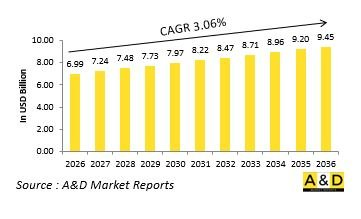
세계의 항공 SATCOM 시장 규모는 2026년에 추정 69억 9,000만 달러이며, 2036년까지 94억 5,000만 달러에 달할 것으로 예측되며, 2026-2036년 예측 기간 동안 CAGR로 3.06%의 성장이 전망됩니다.
소개
항공 SATCOM 능력은 현대 군사 작전에서 필수적인 기반 기술로, 지상 네트워크의 도달 범위 밖에서 활동하는 항공 플랫폼에 안전하고 신뢰할 수 있는 통신 연결을 가능하게 합니다. 이 시스템들은 광활하고 멀리 떨어진 작전 지역에서 항공기, 무인항공기 시스템, 항공지휘소에 걸쳐 음성, 데이터, 영상 전송을 지원합니다. 항공 SATCOM은 고강도 작전 중 지휘통제의 연속성, 정보공유, 작전 조정을 보장합니다. 항공 플랫폼이 고립된 자산이 아닌 정보 허브로서 기능할 수 있는 기회가 늘어남에 따라 그 역할이 확대되고 있습니다. 현대의 군사 작전은 공중, 육지, 해상 영역의 행동 동기화를 위해 끊김 없는 통신에 의존하고 있습니다. 항공 SATCOM은 장시간 작전 수행, 실시간 정보 전달, 조정된 공격 작전을 가능하게 합니다. 또한, 인도적 지원, 재난 대응, 전략적 수송과 같은 비전투 작전도 지원합니다. 작전 수행 시 데이터 연결성에 대한 의존도가 높아짐에 따라 항공 SATCOM은 작전 성공과 운영 탄력성을 지원하는 필수적인 원동력이 되고 있습니다.
항공 SATCOM에서 기술의 영향
기술의 발전으로 항공 SATCOM의 성능과 신뢰성이 크게 향상되었습니다. 안테나 설계의 발전으로 고속 기동 중 신호 안정성이 향상되었습니다. 변조 및 부호화 기술의 고도화로 링크의 견고성을 유지하면서 데이터 처리량이 향상되고 있습니다. 디지털 빔포밍 기술을 통해 위성 자원을 동적으로 할당할 수 있게 되었습니다. 암호화를 강화하여 기밀 통신의 도청을 방지하고 있습니다. 플랫폼 통합 기술을 통해 크기, 무게, 전력 요구 사항을 줄였습니다. 멀티밴드 지원으로 서로 다른 위성 네트워크 간의 운영 유연성이 향상되었습니다. 소프트웨어 정의 아키텍처를 통해 빠른 업데이트와 적응성을 실현하고 있습니다. 이러한 기술 개발로 항공 SATCOM은 견고하고 적응성이 높은 통신 백본으로 강화되고 있습니다.
항공 SATCOM의 주요 촉진요인
첨단 항공 SATCOM 역량에 대한 수요를 촉진하는 요인은 여러 가지가 있습니다. 현대 항공 작전에서 시야 밖 통신의 필요성은 매우 중요합니다. 네트워크 중심 전술의 개념은 지속적인 데이터 교환에 의존하고 있습니다. 무인항공기 운용의 확대는 위성 링크에 대한 의존도를 높이고 있습니다. 공동작전과 연합작전을 위해서는 상호 운용 가능한 통신 시스템이 필요합니다. 분쟁 환경에서 안전하고 강력한 연결성에 대한 필요성은 더 많은 투자를 촉진할 것입니다. 또한, ISR(정보, 감시, 정찰) 및 작전 시스템에 대한 데이터 요구 사항의 증가로 인해 수요가 지속되고 있습니다. 이러한 촉진요인으로 인해 항공 SATCOM은 앞으로도 전략적 우선순위가 될 것입니다.
항공 SATCOM의 지역별 동향
항공 SATCOM에 대한 각 지역의 접근 방식은 다양한 작전적 우선순위를 반영하고 있습니다. 북미 군대는 세계 위성 네트워크와의 통합과 고급 암호화를 중시하고 있습니다. 유럽의 국방 조직은 상호 운용성과 주권적 통신 능력에 초점을 맞추고 있습니다. 아시아태평양은 광활한 해역과 외딴 지역을 커버하는 것을 우선순위로 삼고 있습니다. 중동의 군대는 신속한 대응 작전을 위한 안전한 연결성을 중요시하고 있습니다. 아프리카의 방위 조직은 통신 범위를 확대하기 위해 항공 SATCOM을 점점 더 많이 채택하고 있습니다. 지역을 불문하고 국내 생산능력과 파트너십에 대한 투자가 확대되고 있습니다. 이러한 추세는 현대의 국방 작전에서 항공 SATCOM이 전 세계적으로 중요하다는 것을 강조하고 있습니다.
세계의 항공 SATCOM 시장에 대해 조사 분석했으며, 시장에 영향을 미치는 기술, 향후 10년간의 예측, 각 지역별 동향 등의 정보를 전해드립니다.
지역별
최종사용자별
용도별
북미
촉진요인, 억제요인, 도전과제
PEST
주요 기업
공급업체 티어 현황
기업 벤치마크
유럽
중동
아시아태평양
남미
미국
국방 프로그램
최신 뉴스
특허
이 시장의 현재 기술 성숙도
캐나다
이탈리아
프랑스
독일
네덜란드
벨기에
스페인
스웨덴
그리스
호주
남아프리카공화국
인도
중국
러시아
한국
일본
말레이시아
싱가포르
브라질
The Global Airborne SATCOM market is estimated at USD 6.99 billion in 2026, projected to grow to USD 9.45 billion by 2036 at a Compound Annual Growth Rate (CAGR) of 3.06% over the forecast period 2026-2036.
Introduction
Airborne satellite communication capabilities are fundamental to modern military operations, enabling secure and reliable connectivity for airborne platforms operating beyond the reach of terrestrial networks. These systems support voice, data, and video transmission for aircraft, unmanned aerial systems, and airborne command posts across vast and often remote operational theaters. Airborne SATCOM ensures continuity of command and control, intelligence sharing, and mission coordination during high-tempo operations. Its role has expanded as air platforms increasingly serve as information hubs rather than isolated assets. Modern military operations depend on uninterrupted communication to synchronize actions across air, land, and sea domains. Airborne SATCOM enables long-endurance missions, real-time intelligence dissemination, and coordinated strike operations. It also supports non-combat missions such as humanitarian assistance, disaster response, and strategic transport. As operational reliance on data connectivity grows, airborne SATCOM has become an indispensable enabler of mission success and operational resilience.
Technology Impact in Airborne SATCOM
Technological progress is driving significant enhancements in airborne SATCOM performance and reliability. Advances in antenna design improve signal stability during high-speed maneuvers. Enhanced modulation and coding techniques increase data throughput while maintaining link robustness. Digital beamforming enables dynamic allocation of satellite resources. Improved encryption safeguards sensitive communications against interception. Platform integration technologies reduce size, weight, and power requirements. Multi-band compatibility enhances operational flexibility across different satellite networks. Software-defined architectures allow rapid updates and adaptability. These technological developments strengthen airborne SATCOM as a resilient and adaptable communication backbone.
Key Drivers in Airborne SATCOM
Several factors are driving demand for advanced airborne SATCOM capabilities. The need for beyond-line-of-sight communication is critical for modern air operations. Network-centric warfare concepts rely on persistent data exchange. Expansion of unmanned aerial operations increases reliance on satellite links. Joint and coalition operations require interoperable communication systems. The need for secure and resilient connectivity in contested environments further supports investment. Additionally, increased data requirements for ISR and mission systems sustain demand. These drivers ensure airborne SATCOM remains a strategic priority.
Regional Trends in Airborne SATCOM
Regional approaches to airborne SATCOM reflect different operational priorities. North American forces emphasize integration with global satellite networks and advanced encryption. European defense organizations focus on interoperability and sovereign communication capabilities. Asia-Pacific regions prioritize coverage across vast maritime and remote areas. Middle Eastern forces emphasize secure connectivity for rapid response missions. African defense organizations increasingly adopt airborne SATCOM to extend communication reach. Across regions, investments in domestic capabilities and partnerships are expanding. These trends highlight the global importance of airborne SATCOM in modern defense operations.
Boeing received a $2.8 billion U.S. Space Force contract in July 2025 for the Evolved Strategic Satellite Communications program, covering development and production of two nuclear command-and-control satellites with enhanced jam resistance. Separately, Gogo's SD Government division won a five-year federal contract in October 2025 to deliver multi-band, multi-orbit airborne satellite communications systems to a U.S. government agency, enabling global connectivity for executive transport and special mission aircraft fleets.
By Region
By End - User
By Application
The 10-year Airborne SATCOM Market analysis would give a detailed overview of Airborne SATCOM Market growth, changing dynamics, technology adoption overviews and the overall market attractiveness is covered in this chapter.
This segment covers the top 10 technologies that is expected to impact this market and the possible implications these technologies would have on the overall market.
The 10-year Airborne SATCOM Market forecast of this market is covered in detailed across the segments which are mentioned above.
The regional Airborne SATCOM Market trends, drivers, restraints and Challenges of this market, the Political, Economic, Social and Technology aspects are covered in this segment. The market forecast and scenario analysis across regions are also covered in detailed in this segment. The last part of the regional analysis includes profiling of the key companies, supplier landscape and company benchmarking. The current market size is estimated based on the normal scenario.
North America
Drivers, Restraints and Challenges
PEST
Key Companies
Supplier Tier Landscape
Company Benchmarking
Europe
Middle East
APAC
South America
This chapter deals with the key defense programs in this market, it also covers the latest news and patents which have been filed in this market. Country level 10 year market forecast and scenario analysis are also covered in this chapter.
US
Defense Programs
Latest News
Patents
Current levels of technology maturation in this market
Canada
Italy
France
Germany
Netherlands
Belgium
Spain
Sweden
Greece
Australia
South Africa
India
China
Russia
South Korea
Japan
Malaysia
Singapore
Brazil
The opportunity matrix helps the readers understand the high opportunity segments in this market.
Hear from our experts their opinion of the possible analysis for this market.