



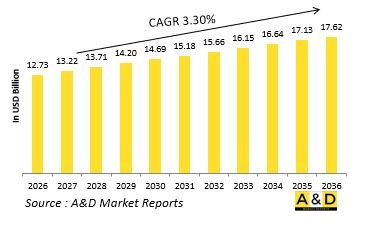
세계의 방위용 옵트로닉스 시장 규모는 2026년에 127억 3,000만 달러로 평가되었고, 2036년까지 176억 2,000만 달러에 달할 것으로 보이며, 2026-2036년의 예측 기간 동안 CAGR 3.30%로 성장할 전망입니다.
세계의 방위용 옵트로닉스 시장은 감시, 표적 지정, 항법 및 위협 탐지를 위해 전자기 스펙트럼 전반에 걸쳐 인간의 시각 능력을 확장하는 전기광학 및 적외선 시스템을 포괄합니다. 이러한 시스템은 광자를 처리, 표시 및 분석이 가능한 전자 신호로 변환하여 어둠 속, 장애물 투과, 장거리에서 핵심적인 능력을 제공합니다. 옵트로닉스 부품에는 열화상 카메라, 영상 증폭기, 레이저 거리 측정기, 표적 지시기, 초분광 센서 등이 포함되며, 개별 병사의 조준경부터 위성 감시 시스템에 이르기까지 모든 군사 영역에 배치됩니다. 이 기술은 감지되지 않은 상태에서의 관측, 정밀 표적 지정, 열악한 시각 환경에서의 항법을 가능하게 합니다. 전쟁이 24시간 작전과 시각적 관측이 제한된 환경으로 확대됨에 따라 옵트로닉스는 전술적, 작전적, 전략적 차원에서 상황 인식과 교전 역학을 근본적으로 변화시키는 전투력 증폭 장치로 자리매김했습니다.
옵트로닉스의 기술 발전은 센서 융합, 해상도 향상, 인지 처리 기술에 집중됩니다. 더 작은 픽셀 피치를 가진 고해상도 열화상 센서는 시스템 크기와 전력 요구량을 줄이면서 더 먼 거리에서 선명한 영상을 제공합니다. 다중 스펙트럼 및 하이퍼스펙트럼 이미징은 여러 스펙트럼 대역의 정보를 결합하여 위장된 물체를 탐지하고 재료 구성을 식별합니다. 고급 영상 처리 알고리즘은 인공지능을 활용해 표적을 자동으로 탐지, 분류, 추적하면서 운용자의 작업 부하를 줄입니다. 열화상, 저조도, 레이저 데이터를 단일 통합 디스플레이로 융합함으로써 포괄적인 상황 정보를 제공합니다. 양자 기반 감지 기술은 감도와 식별 능력에서 혁신적인 향상을 약속합니다. 소형화는 무인 시스템 및 개인 무기를 포함한 소형 플랫폼에의 배치를 지속적으로 촉진합니다. 이러한 혁신은 옵트로닉스를 단순한 시야 증강 도구에서 중요한 전장 정보를 자동으로 추출하고 우선순위를 부여하는 지능형 감지 시스템으로 변모시킵니다.
야간 및 악천후가 더 이상 전술적 휴식 시간을 제공하지 않음에 따라, 모든 환경에서 24시간 운영 능력 확보의 필요성이 옵트로닉스 기술의 지속적인 발전을 주도합니다. 은폐 및 기만 전술을 사용하는 적에 대한 비대칭 전쟁은 첨단 탐지 및 식별 능력에 대한 수요를 증가시킵니다. 플랫폼 생존성 요구사항은 선제적 대응을 가능하게 하기 위해 더 먼 거리에서 더 조기에 위협을 탐지할 것을 요구합니다. 정밀 교전 요건은 가시성 조건과 무관하게 고정밀 표적 데이터를 필요로 합니다. 전 세계 병사 현대화 프로그램은 분대 수준의 상황 인식 및 사격 능력을 향상시키기 위해 개인용 옵트로닉스를 우선시합니다. 또한, 대드론 및 경계 보호 임무는 네트워크화된 옵트로닉스 어레이를 활용한 광역 지속 감시에 대한 새로운 요구사항을 창출합니다. 이러한 촉진요인들은 국방 현대화 주기 전반에 걸쳐 모든 옵트로닉스 범주 및 플랫폼 유형에 대한 지속적인 투자를 보장합니다.
각 지역의 옵트로닉스 개발은 서로 다른 위협 인식, 산업 역량 및 작전 교리를 반영합니다. 북미 프로그램은 디지털화된 전장 공간 통합을 위한 첨단 처리 및 네트워킹 기능을 갖춘 다중 스펙트럼 시스템을 중시합니다. 유럽 개발은 차세대 장갑차 및 항공기를 위한 고성능 열화상 카메라 및 표적 시스템에 집중합니다. 아시아태평양 지역은 특히 보병 대량 배치를 위한 비냉각식 열화상 기술 부문에서 자체 생산이 크게 성장하고 있습니다. 중동 지역 조달은 극한 온도 범위와 장거리 관측이 가능한 사막 환경에 최적화된 시스템을 우선시합니다. 이스라엘 산업은 지속적인 작전 경험을 통해 정교해진 혁신적인 옵트로닉스 솔루션 부문에서 특히 강점을 유지하고 있습니다. 개발도상국들은 대규모 플랫폼 획득의 일환으로 기술 이전 협정을 통해 유능한 옵트로닉스 장비에 점점 더 접근하고 있으나, 정교한 시스템의 유지보수 및 지속성에 종종 어려움을 겪고 있습니다.
본 보고서에서는 세계의 방위용 옵트로닉스 시장에 대해 조사 분석하고, 시장에 영향을 미치는 기술, 향후 10년간의 예측, 각 지역 시장 동향 등의 정보를 제공합니다.
지역별
기술별
플랫폼별
북미
촉진요인, 억제요인, 과제
PEST
주요 기업
공급자 계층 구조
기업 벤치마킹
유럽
중동
아시아태평양
남미
미국
방위 프로그램
최신 뉴스
특허
이 시장의 현재 기술 성숙도
캐나다
이탈리아
프랑스
독일
네덜란드
벨기에
스페인
스웨덴
그리스
호주
남아프리카
인도
중국
러시아
한국
일본
말레이시아
싱가포르
브라질
The Global Defense Optronics market is estimated at USD 12.73 billion in 2026, projected to grow to USD 17.62 billion by 2036 at a Compound Annual Growth Rate (CAGR) of 3.30% over the forecast period 2026-2036.
The Global Defense Optronics Market encompasses electro-optical and infrared systems that extend human vision capabilities across the electromagnetic spectrum for surveillance, targeting, navigation, and threat detection. These systems convert photons into electronic signals that can be processed, displayed, and analyzed, providing critical capabilities in darkness, through obscurants, and at extended ranges. Optronics components include thermal imagers, image intensifiers, laser rangefinders, target designators, and hyperspectral sensors deployed across all military domains-from individual soldier sights to satellite surveillance systems. The technology enables seeing without being seen, targeting with precision, and navigating in degraded visual environments. As warfare extends into around-the-clock operations and environments where visual observation is limited, optronics have become force multipliers that fundamentally alter situational awareness and engagement dynamics across tactical, operational, and strategic levels.
Technological advancement in optronics focuses on sensor fusion, resolution enhancement, and cognitive processing. High-definition thermal sensors with smaller pixel pitches deliver sharper imagery at longer ranges while reducing system size and power requirements. Multispectral and hyperspectral imaging combines information across numerous spectral bands to detect camouflaged objects and identify material composition. Advanced image processing algorithms employ artificial intelligence to automatically detect, classify, and track targets while reducing operator workload. Fusion of thermal, low-light, and laser data into single integrated displays provides comprehensive situational pictures. Quantum-based sensing technologies promise revolutionary improvements in sensitivity and discrimination capabilities. Miniaturization continues to drive deployment on smaller platforms including unmanned systems and individual weapons. These innovations transform optronics from simple vision enhancement tools into intelligent sensing systems that automatically extract and prioritize critical battlefield information.
The imperative for 24/7 operational capability across all environments drives continuous optronics enhancement, as night and adverse weather no longer provide tactical respite. Asymmetric warfare against adversaries employing concealment and deception tactics increases demand for advanced detection and identification capabilities. Platform survivability requirements push for earlier threat detection at greater distances to enable proactive countermeasures. Precision engagement mandates necessitate highly accurate targeting data regardless of visibility conditions. Soldier modernization programs worldwide prioritize individual optronics to enhance squad-level situational awareness and marksmanship. Additionally, counter-drone and perimeter protection missions create new requirements for wide-area persistent surveillance using networked optronics arrays. The convergence of these drivers ensures sustained investment across all optronics categories and platform types throughout defense modernization cycles.
Regional optronics development reflects differing threat perceptions, industrial capabilities, and operational doctrines. North American programs emphasize multi-spectral systems with advanced processing and networking for integration into digitized battlespaces. European development focuses on high-performance thermal imagers and targeting systems for next-generation armored vehicles and aircraft. The Asia-Pacific region shows strong growth in indigenous production, particularly in uncooled thermal technology for widespread infantry deployment. Middle Eastern procurement prioritizes systems optimized for desert environments with extreme temperature ranges and long observation distances. Israeli industry maintains particular strength in innovative optronics solutions refined through continuous operational experience. Developing nations increasingly access capable optronics through technology transfer arrangements as part of larger platform acquisitions, though often facing challenges with maintenance and sustainment of sophisticated systems.
MKU Limited has been awarded a major contract by the Indian Army for the supply of 29,762 units of its advanced Netro NW 3000 Night Vision Weapon Sights, with the order valued at approximately ₹660 crore. Finalized under the special procurement powers of the Raksha Mantri, the agreement represents one of the largest electro-optics acquisitions undertaken by the Indian Army to date. The contract underscores the growing emphasis on equipping frontline forces with domestically developed, high-performance technologies tailored for modern combat environments. The Netro NW 3000 systems are designed to enhance night-time operational capability by enabling accurate target acquisition and engagement under low-visibility conditions, thereby improving soldier effectiveness and battlefield survivability. This procurement further reflects India's broader strategic focus on strengthening indigenous defense manufacturing under the Make in India and Atmanirbhar Bharat initiatives. By sourcing a significant volume of critical electro-optical equipment from a domestic supplier, the Indian Army is reducing reliance on imports while fostering the growth of local design, engineering, and production capabilities. Beyond its immediate operational impact, the contract reinforces MKU's position as a key contributor to India's defense technology ecosystem. It also signals continued momentum in the Army's modernization efforts, particularly in enhancing infantry lethality and situational awareness through locally developed, mission-ready solutions.
By Region
By Technology
By Platform
The 10-year Defense Optronics Market analysis would give a detailed overview of Defense Optronics Market growth, changing dynamics, technology adoption overviews and the overall market attractiveness is covered in this chapter.
This segment covers the top 10 technologies that is expected to impact this market and the possible implications these technologies would have on the overall market.
The 10-year Defense Optronics Market forecast of this market is covered in detailed across the segments which are mentioned above.
The regional Defense Optronics Market trends, drivers, restraints and Challenges of this market, the Political, Economic, Social and Technology aspects are covered in this segment. The market forecast and scenario analysis across regions are also covered in detailed in this segment. The last part of the regional analysis includes profiling of the key companies, supplier landscape and company benchmarking. The current market size is estimated based on the normal scenario.
North America
Drivers, Restraints and Challenges
PEST
Key Companies
Supplier Tier Landscape
Company Benchmarking
Europe
Middle East
APAC
South America
This chapter deals with the key defense programs in this market, it also covers the latest news and patents which have been filed in this market. Country level 10 year market forecast and scenario analysis are also covered in this chapter.
US
Defense Programs
Latest News
Patents
Current levels of technology maturation in this market
Canada
Italy
France
Germany
Netherlands
Belgium
Spain
Sweden
Greece
Australia
South Africa
India
China
Russia
South Korea
Japan
Malaysia
Singapore
Brazil
The opportunity matrix helps the readers understand the high opportunity segments in this market.
Hear from our experts their opinion of the possible analysis for this market.