


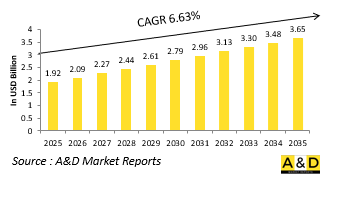
세계의 멀티롤 헬리콥터 시뮬레이션 시장 규모는 2025년에 19억 2,000만 달러에 달할 것으로 보입니다.

멀티 롤 헬리콥터 시뮬레이션은 현대 방어 및 항공 훈련에 필수적인 요소가 되고 있습니다. 이러한 시뮬레이션은 운송, 정찰, 수색 구조, 해상 작전, 전투 지원 등 폭넓은 역할에서 사용되는 멀티롤 헬리콥터의 운용상의 다양성을 재현하고 있습니다. 방위 기관, 우주항공 제조업체, 훈련 기관과 같은 이해 관계자들은 장기적인 능력 개발을 지원하기 위해 이 분야에 대한 투자를 늘리고 있습니다.
기술의 진보는 멀티 롤 헬리콥터 시뮬레이션 분야를 크게 바꾸고 있습니다. 파일럿은 악천후나 복잡한 지형, 역동적인 임무 환경 등 진짜 시나리오를 체험할 수 있게 되어, 기술 습득과 의사 결정 능력의 양쪽 모두가 강화되고 있습니다. 시뮬레이션 가능한 한계를 더욱 넓혀 특정 상황에서 완전한 비행 시뮬레이터를 보완하거나 대체할 수 있는 휴대 가능하고 확장 가능한 훈련 솔루션을 제공합니다. 또한 사이버 보안을 강화함으로써 시뮬레이션 플랫폼은 간섭으로부터 안전하게 보호됩니다.
멀티롤 헬리콥터 시뮬레이션의 세계 성장과 중요성을 뒷받침하고 있는 주요 요인은 몇 가지 있습니다. 안전성에의 배려도 중요한 추진력입니다. 마모를 대폭 경감해 전체적인 운용 경비를 삭감할 수가 있습니다. 또, 훈련 능력을 근대화해, 진화하는 임무 프로파일에 대응시킨다고 하는 방위 기관의 전략적 우선 사항도, 채용의 뒷받침이 되고 있습니다. 마지막으로, 다국간의 상호 운용성과 조정된 훈련 연습의 필요성도, 동맹군이나 합동 서비스의 환경을 통합할 수 있는 시뮬레이션 시스템의 개발을.
멀티롤 헬리콥터 시뮬레이션의 상황을 형성하는데 있어 지역의 역학이 중요한 역할을 하고 있습니다. 유럽에서는 지정 긴장 증가와 NATO 지역 내 공동 작전의 중요성으로 인해 매우 상호 운용 가능하고 표준화된 시뮬레이션 플랫폼 하는 수요가 높아지고 있습니다. 또, 국경을 넘은 훈련 기능이나 하이브리드전 시나리오의 임무 리허설에 중점이 놓여져 있습니다. 따라서 여러 국가가 확대하는 헬리콥터를 지원하기 위한 시뮬레이션 훈련 등 회전익 능력의 강화에 임하고 있습니다. 따라서 제한된 항공기 자원을 소비하지 않고 기술과 회복력을 높이는 방법으로 시뮬레이션에 대한 관심이 높아지고 있습니다.
돌격용 회전익기에서 주도권을 유지하기 위해 미국 육군은 Future Vertical Lift(FVL) 이니셔티브의 중심 요소로서 Future Long-Range Assault 에어크래프트(FLRAA)의 출시를 자리매김하고 있습니다. FLRAA는 미국 육군, 공군, 해군, 연안 경비대, 그리고 몇몇 동맹국에서 전술 유틸리티 헬리콥터의 기간기로서 오랫동안 활약해 온 상징적인 UH-60 Black Hawk를 대체하게 됩니다. 1979년 도입 이래, Black Hawk는 아프가니스탄, 이라크를 비롯한 세계 각지의 작전에서 중요한 전력이 되어 왔습니다. Sikosky와 Honeywell과 같은 중요한 파트너가 이끄는 수많은 업그레이드가 이루어졌으며 냉전 시대에 기원을 가졌음에도 불구하고 현대 전투 환경에서 효과적이고 적절한 존재로 남아 있습니다.
본 보고서에서는 세계의 멀티롤 헬리콥터 시뮬레이션 시장에 대해 조사했으며, 10년간의 부문별 시장 예측, 기술 동향, 기회 분석, 기업 프로파일, 국가별 데이터 등을 정리했습니다.
국방 분야 세계 멀티 롤 헬리콥터 시뮬레이션 시장 - 목차
방어 분야 세계 멀티 롤 헬리콥터 시뮬레이션 시장 보고서 정의
방어 분야 세계 멀티 롤 헬리콥터 시뮬레이션 시장 세분화
지역별
기술별
시뮬레이션 유형별
구성 요소별
향후 10년간 방어 분야에서 세계 멀티롤 헬리콥터 시뮬레이션 시장 분석
방위 분야에서 세계 멀티롤 헬리콥터 시뮬레이션 시장의 10년간 분석은 방어 분야에서 세계 멀티롤 헬리콥터 시뮬레이션 시장의 성장, 변화하는 동향, 기술 채용 개요 및 전체 시장 매력에 대한 자세한 개요를 제공하고 이 장에서 설명합니다.
이 부문에서는 이 시장에 영향을 미칠 것으로 예상되는 상위 10개 기술과 이러한 기술이 시장 전체에 미칠 수 있는 영향에 대해 설명합니다.
방어 분야에서 세계 멀티 롤 헬리콥터 시뮬레이션 시장 예측
이 시장 방어에서 10 년간 세계의 멀티 롤 헬리콥터 시뮬레이션 시장 예측은 위의 부문에 걸쳐 자세히 설명되어 있습니다.
방위 분야의 멀티 롤 헬리콥터 시뮬레이션 시장의 지역별 동향과 예측
이 부문은 지역별 대 드론 시장 동향, 촉진요인, 억제요인, 과제, 그리고 정치, 경제, 사회, 기술 등의 측면을 망라하고 있습니다. 또한 지역별 시장 예측과 시나리오 분석도 자세히 다루고 있습니다. 지역 분석의 끝에는 주요 기업 프로파일링, 공급업체 상황, 기업 벤치마킹가 포함됩니다. 현재 시장 규모는 일반적인 시나리오를 기반으로 추정됩니다.
북미
촉진요인, 억제요인, 과제
PEST
주요 기업
공급자 계층의 상황
기업 벤치마킹
유럽
중동
아시아태평양
남미
방위 분야에서 세계의 멀티 롤 헬리콥터 시뮬레이션 시장의 국가별 분석
이 장에서는 이 시장에서 주요 방어 프로그램을 다루며 이 시장에서 신청된 최신 뉴스와 특허에 대해서도 설명하고, 국가 수준의 10년간 시장 예측과 시나리오 분석에 대해서도 설명합니다.
미국
방어 프로그램
최신 뉴스
특허
이 시장의 현재 기술 성숙도
캐나다
이탈리아
프랑스
독일
네덜란드
벨기에
스페인
스웨덴
그리스
호주
남아프리카
인도
중국
러시아
한국
일본
말레이시아
싱가포르
브라질
방어 분야에서 세계 멀티 롤 헬리콥터 시뮬레이션 시장의 기회 매트릭스
방어 분야에서 세계의 멀티 롤 헬리콥터 시뮬레이션 시장에 대한 전문가의 의견
The global Multirole Helicopter Simulation market is estimated at USD 1.92 billion in 2025, projected to grow to USD 3.65 billion by 2035 at a Compound Annual Growth Rate (CAGR) of 6.63% over the forecast period 2025-2035.
Multirole helicopter simulation has become an essential component of modern defense and aviation training. As armed forces and civil operators seek to improve mission readiness, safety, and cost-efficiency, simulation platforms offer a highly realistic and risk-free environment to train pilots and crew members for a variety of complex missions. These simulations replicate the operational versatility of multirole helicopters, which are used in a wide range of roles such as transport, reconnaissance, search and rescue, maritime operations, and combat support. The global landscape for these systems reflects growing recognition of simulation's value in both initial training and mission rehearsal. As helicopters become more technologically advanced and mission profiles more complex, simulation serves not only as a training aid but as a tool for adapting to evolving operational demands. Industry stakeholders, including defense agencies, aerospace manufacturers, and training organizations, are increasingly investing in this area to support long-term capability development. The global market for multirole helicopter simulation continues to evolve, shaped by strategic priorities, innovation in training methodologies, and the need to reduce real-world operational risk while maintaining a high standard of preparedness.
Technological advancements are profoundly transforming the field of multirole helicopter simulation. With the integration of immersive technologies such as high-fidelity visual systems, advanced physics engines, and artificial intelligence-driven behavior modeling, simulators now offer levels of realism that closely replicate actual flight conditions. These innovations enable pilots to experience authentic scenarios, including adverse weather, complex terrains, and dynamic mission environments, enhancing both skill acquisition and decision-making capabilities. Interoperability has also become a critical feature, allowing simulators to connect with other training systems for joint and combined mission exercises. Virtual and augmented reality are further pushing the boundaries of what can be simulated, offering portable and scalable training solutions that can supplement or replace full-flight simulators in certain contexts. The inclusion of machine learning enables adaptive training systems that tailor scenarios to individual performance, accelerating learning curves. Moreover, cybersecurity enhancements ensure that simulation platforms remain protected from interference, a growing concern as more systems become networked. Overall, technology is not only enhancing training effectiveness but also enabling more flexible, cost-efficient deployment of simulation capabilities in both centralized training centers and forward-operating environments.
Several key factors are propelling the growth and importance of multirole helicopter simulation globally. First and foremost is the operational necessity for mission-ready aircrews who can perform under a wide range of conditions and mission types. As multirole helicopters are deployed in increasingly diverse scenarios, training systems must keep pace with these evolving demands. Safety considerations are another critical driver. Simulation allows crews to practice emergency procedures, combat scenarios, and complex maneuvers without putting lives or equipment at risk. Budget constraints also play a role, as simulation offers a cost-effective alternative to in-air training, significantly reducing wear on equipment and overall operational expense. Environmental and logistical limitations further underscore the value of simulation, allowing training to continue uninterrupted by weather, location constraints, or equipment availability. Additionally, the fast pace of technological change in rotorcraft platforms demands constant retraining and system familiarization, which simulation provides efficiently. Strategic priorities among defense organizations to modernize training capabilities and align with evolving mission profiles also drive adoption. Lastly, the need for multinational interoperability and coordinated training exercises supports the development of simulation systems capable of integrating across allied forces and joint service environments.
Regional dynamics play a significant role in shaping the multirole helicopter simulation landscape. In North America, a mature defense training infrastructure supports extensive use of advanced simulators, with a strong emphasis on integration with broader joint force training systems. Defense modernization programs continue to prioritize simulation to maintain strategic readiness. In Europe, increased geopolitical tensions and a focus on joint operations within NATO are driving demand for highly interoperable and standardized simulation platforms. The emphasis is on cross-border training capabilities and mission rehearsal for hybrid warfare scenarios. In the Asia-Pacific region, rising defense budgets and ongoing territorial disputes are prompting several nations to enhance rotary-wing capabilities, including simulation training to support expanding helicopter fleets. Regional investments are also aimed at developing domestic training and simulation industries to reduce reliance on foreign systems. In the Middle East, security threats and the use of helicopters in both military and humanitarian roles have led to increased interest in simulation as a way to build skill and resilience without expending limited aircraft resources. Across Latin America and Africa, simulation adoption is slower but gaining momentum as part of broader defense and aviation modernization strategies, often supported through international partnerships and training programs.
To preserve its leadership in assault-utility rotorcraft, the U.S. Army is positioning the launch of the Future Long-Range Assault Aircraft (FLRAA) as a central element of its Future Vertical Lift (FVL) initiative. This program aims to develop a next-generation fleet of advanced aircraft that will equip the military with the capabilities needed to deter threats, engage in combat, and achieve victory in future conflicts. FLRAA is set to replace the iconic UH-60 Black Hawk, which has long served as the backbone of the tactical utility helicopter fleet across the U.S. Army, Air Force, Navy, Coast Guard, and several allied nations. Since its introduction in 1979, the Black Hawk has been a critical asset in operations across Afghanistan, Iraq, and other global theaters. Over more than four decades, the helicopter has undergone numerous upgrades-spearheaded by Sikorsky and key partners like Honeywell-to ensure it remains effective and relevant in modern combat environments, despite its origins during the Cold War.
Global multirole helicopter simulation market in defense- Table of Contents
Global multirole helicopter simulation market in defense Report Definition
Global multirole helicopter simulation market in defense Segmentation
By Region
By Technology
By Type of simulation
By Component
Global multirole helicopter simulation market in defense Analysis for next 10 Years
The 10-year Global multirole helicopter simulation market in defense analysis would give a detailed overview of Global multirole helicopter simulation market in defense growth, changing dynamics, technology adoption overviews and the overall market attractiveness is covered in this chapter.
This segment covers the top 10 technologies that is expected to impact this market and the possible implications these technologies would have on the overall market.
Global multirole helicopter simulation market in defense Forecast
The 10-year Global multirole helicopter simulation market in defense forecast of this market is covered in detailed across the segments which are mentioned above.
Regional Global multirole helicopter simulation market in defense Trends & Forecast
The regional counter drone market trends, drivers, restraints and Challenges of this market, the Political, Economic, Social and Technology aspects are covered in this segment. The market forecast and scenario analysis across regions are also covered in detailed in this segment. The last part of the regional analysis includes profiling of the key companies, supplier landscape and company benchmarking. The current market size is estimated based on the normal scenario.
North America
Drivers, Restraints and Challenges
PEST
Key Companies
Supplier Tier Landscape
Company Benchmarking
Europe
Middle East
APAC
South America
Country Analysis of Global multirole helicopter simulation market in defense
This chapter deals with the key defense programs in this market, it also covers the latest news and patents which have been filed in this market. Country level 10 year market forecast and scenario analysis are also covered in this chapter.
US
Defense Programs
Latest News
Patents
Current levels of technology maturation in this market
Canada
Italy
France
Germany
Netherlands
Belgium
Spain
Sweden
Greece
Australia
South Africa
India
China
Russia
South Korea
Japan
Malaysia
Singapore
Brazil
Opportunity Matrix for Global multirole helicopter simulation market in defense
The opportunity matrix helps the readers understand the high opportunity segments in this market.
Expert Opinions on Global multirole helicopter simulation market in defense
Hear from our experts their opinion of the possible analysis for this market.